
Introduction: Every Star You See Will One Day Be Gone
On a clear night, far from city lights, the sky above you blazes with light from thousands of stars. They look permanent, ancient, and utterly unchanging — the same fixed points that guided sailors across oceans, inspired poets across centuries, and filled philosophers with wonder across millennia. It is easy to look at that glittering canopy and assume it has always looked exactly this way and always will.
It has not. And it will not.
Every single star you can see with your naked eye is a temporary phenomenon — a vast, furiously energetic ball of plasma engaged in a constant battle between the inward crush of gravity and the outward pressure of nuclear fire. That battle will eventually end. For some stars, the ending is quiet and gradual, a slow dimming into a cooling ember the size of Earth. For others, it is one of the most violent events in the known universe — an explosion so powerful it briefly outshines an entire galaxy of hundreds of billions of stars, scattering the atomic building blocks of planets and potentially life across light-years of space.
The life cycle of stars is one of the most beautiful, dramatic, and consequential stories in all of science. It is the story of where the atoms in your body came from. The carbon in your cells, the iron in your blood, the calcium in your bones — all of it was forged inside stars that lived and died billions of years before our Sun was born. You are, in the most literal sense possible, made of stardust. Understanding how that stardust was made — how stars are born, how they live, and what happens when a star dies — is not merely an exercise in astronomical curiosity. It is understanding the deepest chapter of your own origin story.
1. The Birth of a Star: Where Everything Begins
To understand what happens when a star dies, you first need to understand how stars come to life — because the circumstances of a star’s birth determine almost everything about how it will ultimately end.
Stars are born inside enormous clouds of gas and dust called nebulae, scattered throughout galaxies like the Milky Way. These clouds are mostly hydrogen, the simplest and most abundant element in the universe, with smaller amounts of helium and trace quantities of heavier elements. On their own, these clouds can persist for millions of years in a relatively stable state. But when something disturbs them — a shockwave from a nearby supernova explosion, a gravitational nudge from passing stars, or the tidal forces of a spiral arm in their parent galaxy — regions within the cloud begin to collapse under their own gravity.
As a region collapses, it heats up. The infalling gas compresses, and compression generates heat — the same physical principle that makes a bicycle pump warm when you squeeze air through it. Over hundreds of thousands of years, the collapsing region forms a dense, hot object called a protostar, surrounded by a rotating disk of gas and dust. The protostar continues to gather material from its surroundings, growing in mass and temperature. Eventually — when its core temperature reaches approximately 10 million degrees Celsius — something extraordinary happens.
The Ignition of Nuclear Fusion
At 10 million degrees, hydrogen nuclei at the core are moving fast enough and packed tightly enough to overcome the electromagnetic repulsion that normally keeps them apart. They begin to collide and fuse, forming helium nuclei and releasing an enormous quantity of energy in the process. This is nuclear fusion — the same process that powers hydrogen bombs, but occurring continuously at the heart of a star, releasing energy equivalent to billions of nuclear explosions every second.
The energy released by fusion creates outward pressure that counteracts the inward pull of gravity. When these two forces balance, the star reaches a stable state called the main sequence — and a new star is born. Our own Sun has been burning on the main sequence for approximately 4.6 billion years, and it will continue to do so for roughly another five billion years. It is, in cosmic terms, middle-aged.
2. Life on the Main Sequence: The Long Stable Burn
The main sequence is the longest and most stable phase in the life cycle of a star. During this period, the star burns hydrogen in its core at a steady rate, maintaining the equilibrium between gravitational collapse and fusion-driven outward pressure that defines its existence as a functioning star. How long a star spends on the main sequence — and what happens when it leaves — depends almost entirely on one thing: how massive it is.
This relationship between mass and stellar fate is one of the most elegant and important principles in astrophysics. You might assume that a more massive star, with more hydrogen fuel available, would live longer. In fact, the opposite is true. A more massive star has stronger gravity compressing its core, which drives higher temperatures and pressures, which in turn accelerate the rate of nuclear fusion dramatically. The result is that massive stars burn through their hydrogen fuel at a prodigious rate, living fast and dying young on a cosmic timescale.
A Tale of Two Stars
A star like our Sun, with modest mass, will spend roughly 10 billion years on the main sequence — fusing hydrogen at a rate that sustains the equilibrium while consuming fuel slowly enough to last for billions of years. A star ten times more massive than the Sun may spend only 30 million years on the main sequence before exhausting its core hydrogen — a cosmic eyeblink compared to the Sun’s leisurely timeline. At the other extreme, red dwarf stars with only a fraction of the Sun’s mass burn so slowly and so efficiently that they can remain on the main sequence for trillions of years — far longer than the current age of the universe. Every red dwarf that has ever formed since the Big Bang is still happily fusing hydrogen today.
3. When Hydrogen Runs Out: The Beginning of the End
The crisis that eventually kills every star begins the same way, regardless of the star’s size: the hydrogen fuel in the stellar core runs out. When fusion stops at the core, the outward pressure it was providing disappears, and gravity wins — temporarily. The core begins to contract under its own weight, heating up as it does so. The heat from this contraction spreads outward into the shell of hydrogen surrounding the exhausted core, igniting fusion in that shell and causing the star’s outer layers to expand dramatically.
As the outer layers expand and cool, the star transforms from what astronomers call a main-sequence star into a red giant — a bloated, cooler-surfaced, vastly larger version of its former self. The Sun, when it reaches this phase in approximately five billion years, will expand to roughly 100 to 200 times its current diameter, engulfing Mercury, Venus, and possibly Earth in the process. From the perspective of anyone unfortunate enough to be on Earth at that point — though humanity will presumably have long since moved on — the Sun will fill most of the sky.
The Helium Flash: A New Fire in the Core
As the red giant phase progresses, the core continues to contract and heat. When core temperatures reach approximately 100 million degrees Celsius, a new fusion reaction ignites — helium, the ash of hydrogen burning, itself begins to fuse into carbon and oxygen. For stars like the Sun, this ignition of helium fusion happens in a sudden, dramatic event called the helium flash, releasing enormous energy in a very short time. The star then settles into a new equilibrium, burning helium in its core while hydrogen continues fusing in the surrounding shell. This phase is shorter than the main sequence — for a Sun-like star, perhaps a billion years — and its end triggers the final act of the star’s life.
4. The Death of a Sun-Like Star: Beauty From Endings
For stars with masses similar to our Sun — or from roughly half to eight times the Sun’s mass — the death process is dramatic in its own way but lacks the explosive violence of more massive stars. As helium in the core is exhausted and the core contracts again, temperatures are not sufficient to ignite the carbon and oxygen it has produced. The core has reached the end of its nuclear road.
What happens next is one of the most beautiful phenomena in all of astronomy. The outer layers of the star, no longer supported by fusion energy, are expelled into surrounding space in a series of pulses driven by radiation pressure and stellar winds. This expanding shell of gas, illuminated and ionized by the hot, contracting core at its center, forms what astronomers call a planetary nebula — despite having nothing to do with planets, the name stuck from early telescope observers who thought the glowing, rounded shapes resembled planetary discs.
Planetary Nebulae: The Universe’s Most Stunning Artwork
Planetary nebulae are among the most visually spectacular objects in the cosmos. NASA’s Hubble Space Telescope has photographed hundreds of them in extraordinary detail, revealing structures of astonishing intricacy — concentric shells, bipolar lobes, radial filaments, and rings of gas lit in vivid colors by the radiation of the dying star at their center. The Helix Nebula, sometimes called the Eye of God, stretches nearly three light-years across and displays layers of expelled gas in rings of blue and red that look almost architectural in their regularity. The Ring Nebula, the Butterfly Nebula, the Cat’s Eye Nebula — each one is the final exhalation of a star that spent billions of years quietly fusing hydrogen, ending its life in a display of color and light that will persist for tens of thousands of years.
At the center of every planetary nebula, the exposed stellar core remains — a white dwarf. This dense, Earth-sized remnant is no longer powered by fusion. It is the cooling corpse of what was once a star’s core, composed primarily of carbon and oxygen, radiating away the heat it has accumulated over its lifetime. A white dwarf is extraordinarily dense — a teaspoon of white dwarf material weighs approximately five tonnes on Earth —, but it is not collapsing further because a quantum mechanical pressure called electron degeneracy pressure supports it against gravity. Over billions of years, the white dwarf cools and dims, eventually fading to a theoretical black dwarf — though the universe is not yet old enough for any white dwarf to have cooled completely.
5. The Death of a Massive Star: Supernovae and the Forge of Elements
For stars more than eight times the mass of the Sun, the life cycle of stars concludes almost incomprehensible violence. These massive stars do not quietly shed their outer layers into a gentle nebula. They detonate.
As a massive star exhausts each successive fuel source — hydrogen, helium, carbon, neon, oxygen, silicon — it ignites the next heavier element in a series of increasingly rapid fusion stages. Hydrogen burning lasts millions of years. Helium burning lasts hundreds of thousands of years. Carbon burning lasts thousands of years. Oxygen burning lasts months. Silicon burning — the final stage, producing iron — lasts approximately one week. Iron is the endpoint of stellar fusion because fusing iron does not release energy — it requires energy input instead. When an iron core accumulates to approximately 1.4 times the mass of the Sun, electron degeneracy pressure can no longer support it, and the core collapses catastrophically in less than a second.
The Supernova Explosion
The collapsing core reaches nuclear density — the density of an atomic nucleus — and rebounds with tremendous force, sending a shockwave outward through the star’s outer layers. This shockwave, amplified by an enormous burst of neutrinos streaming from the compressed core, blows the entire outer structure of the star into space in a supernova explosion. The energy released in a supernova in that brief moment exceeds what the Sun will radiate over its entire 10-billion-year lifetime. For weeks, the expanding debris cloud can outshine entire galaxies containing hundreds of billions of stars.
Supernovae are not merely spectacular — they are chemically essential. The explosion creates and disperses elements heavier than iron — gold, silver, platinum, uranium — that cannot be produced by ordinary stellar fusion. Every atom of gold ever mined on Earth, every gram of uranium ever used as fuel, was forged in the final seconds of a massive star’s death and scattered across space by the explosion that followed. Supernovae are the universe’s element factory, and the material they scatter becomes the raw material for the next generation of stars, planets, and potentially life.
6. What Remains: Neutron Stars, Pulsars, and Black Holes
When a massive star explodes as a supernova, it leaves behind a remnant whose nature depends on how much mass remains after the explosion. For cores between roughly 1.4 and 3 solar masses, the result is a neutron star — one of the most extreme objects in the known universe. Neutron stars pack roughly 1.5 times the mass of the Sun into a sphere approximately 20 kilometers in diameter. At this density, electrons and protons are crushed together to form neutrons, and the entire object becomes essentially a single, enormous atomic nucleus.
The conditions on and around a neutron star are beyond anything in ordinary human experience. Surface gravity is approximately 100 billion times Earth’s. The magnetic field of some neutron stars — called magnetars — is a trillion times stronger than Earth’s field. Rapidly rotating neutron stars emit beams of radio waves from their magnetic poles as they spin, sweeping those beams across space like cosmic lighthouses. When those beams happen to sweep across Earth, we detect them as precisely timed pulses — these are pulsars, whose initial discovery in 1967 was so strikingly regular that Cambridge astronomers briefly considered whether they might be artificial signals.
The Ultimate Fate: Black Holes
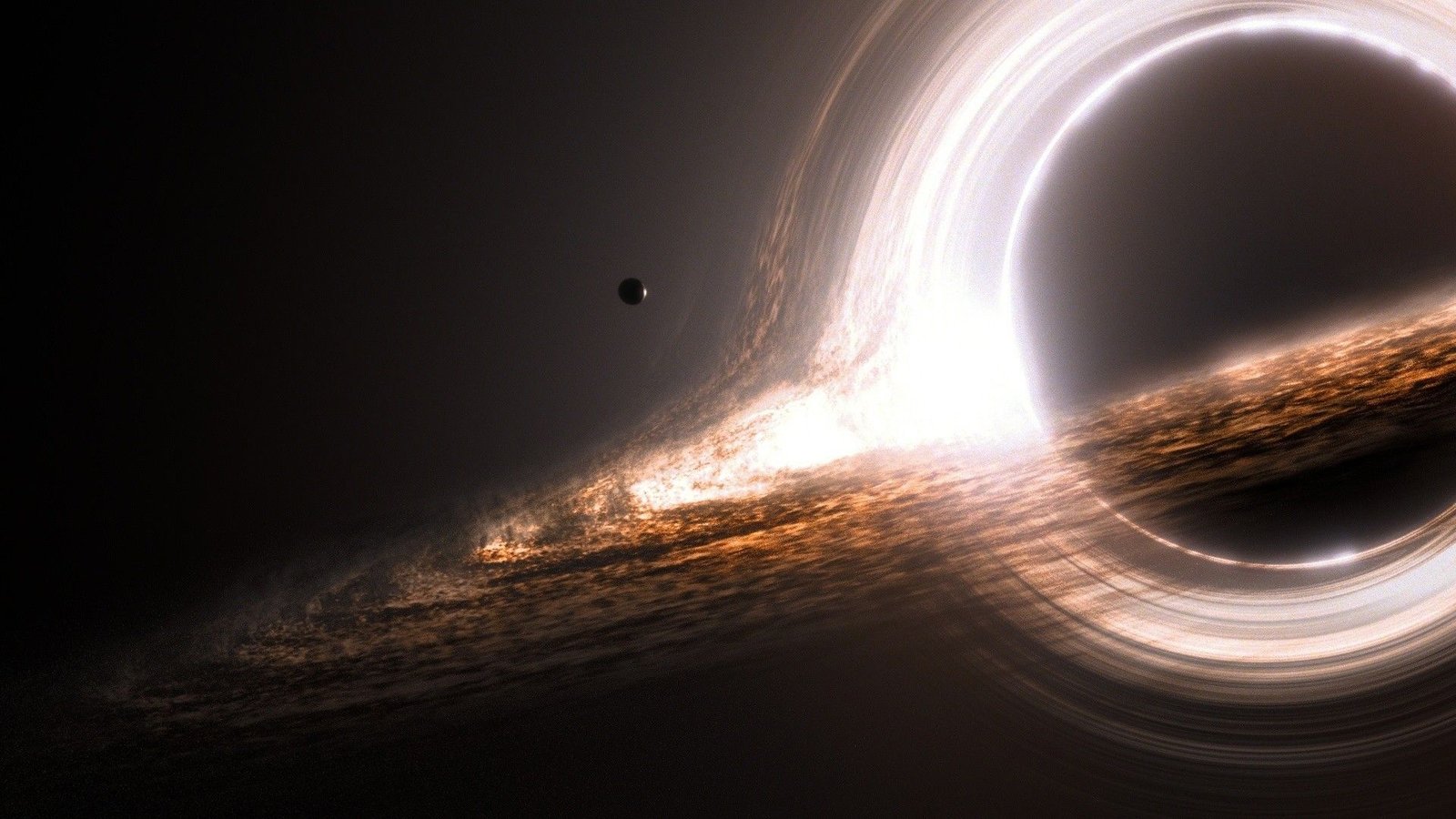
For supernova remnant cores exceeding approximately three solar masses, not even neutron degeneracy pressure can hold back gravity. The core collapses completely, passing through a point of no return called the event horizon and forming a black hole — a region of spacetime where gravity is so intense that nothing, not even light, can escape. Black holes of stellar mass, with masses between a few and a few dozen solar masses, are the direct descendants of the most massive stars in the universe.
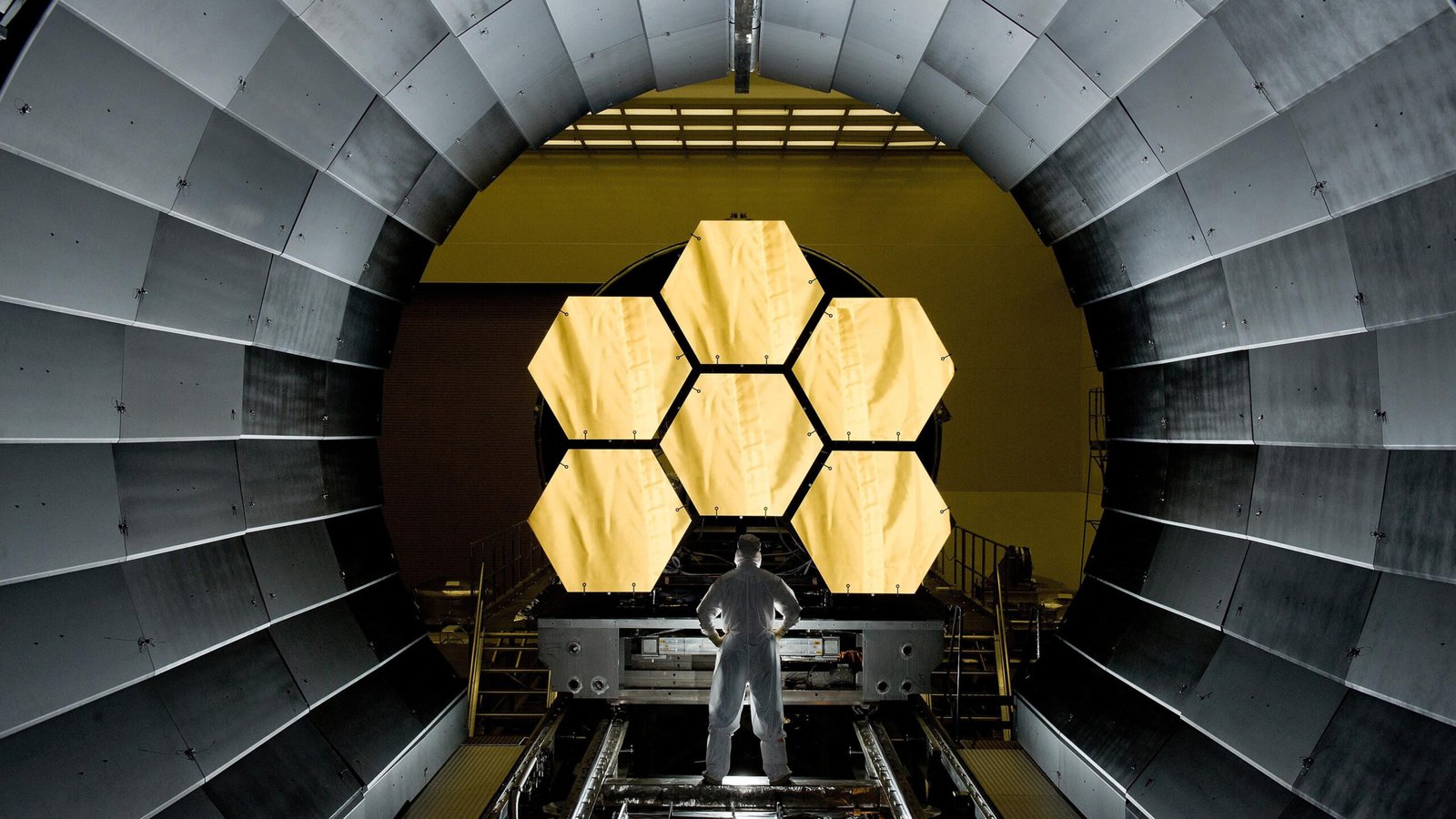
The James Webb Space Telescope and the Event Horizon Telescope have been expanding our understanding of black holes dramatically in recent years — from the first direct image of a supermassive black hole at the center of galaxy M87 to new revelations about the black hole at the center of our own Milky Way. These observations connect directly back to the story of stellar death, as the supermassive black holes at the centers of galaxies are believed to have grown through the accumulation of matter — including the remnants of countless stellar deaths over billions of years.
Frequently Asked Questions (FAQ)
Q: What happens when a star like our Sun dies? When the Sun exhausts its hydrogen fuel in approximately five billion years, it will expand into a red giant, potentially engulfing the inner planets. It will then shed its outer layers into a colorful planetary nebula and leave behind a dense, Earth-sized remnant called a white dwarf. The white dwarf will gradually cool over billions of years, eventually becoming a theoretical black dwarf — a cold, dark stellar corpse.
Q: What is a supernova, and how does it happen? A supernova occurs when a massive star — typically more than eight times the Sun’s mass — exhausts its nuclear fuel and its iron core collapses catastrophically under its own gravity. The resulting shockwave blows the star’s outer layers into space in an explosion that can briefly outshine an entire galaxy. Supernovae are responsible for distributing heavy elements, including gold, silver, and uranium, throughout the universe.
Q: How long do stars live? Stellar lifespans vary enormously with mass. Red dwarf stars with a fraction of the Sun’s mass can live for trillions of years — far longer than the current age of the universe. Sun-like stars live for roughly 10 billion years. Massive stars ten or more times the Sun’s mass may live only a few tens of millions of years before exploding as supernovae. The most massive stars known can exhaust their fuel in as little as a few million years.
Q: Are the elements in our bodies really made in stars? Yes, this is one of the most profound and well-established facts in astrophysics. Hydrogen was produced in the Big Bang, but every heavier element — including the carbon, oxygen, nitrogen, calcium, and iron that make up the human body — was forged through nuclear fusion inside stars and distributed into space by stellar winds and supernova explosions. The atoms in your body have been through multiple cycles of stellar birth, life, and death before becoming part of you.
Q: What is the difference between a neutron star and a black hole? Both neutron stars and black holes are remnants left behind after the supernova deaths of massive stars. A neutron star forms when the remnant core has a mass between roughly 1.4 and 3 solar masses — it is supported against complete collapse by neutron degeneracy pressure and remains a physical, observable object about 20 kilometers across. A black hole forms when the remnant core exceeds approximately three solar masses, at which point no known force can halt the collapse, and the object disappears behind an event horizon from which nothing can escape.
Conclusion: In the Death of Stars, the Universe Finds Its Richest Meaning
There is a perspective available to anyone who truly understands the life cycle of stars that transforms the way the universe feels. When you learn that the calcium in your bones was forged in the core of a star that burned out billions of years before Earth existed, and was scattered across interstellar space by the explosion that ended that star’s life, and drifted through the cosmos for eons before becoming part of the nebula from which our solar system formed, and eventually found its way into the body of a creature capable of looking up at the sky and asking where it came from — something shifts. The universe stops feeling like a cold and indifferent void and starts feeling like something closer to a story. Your story.
What happens when a star dies is not merely an astronomical event. It is an act of cosmic generosity — the scattering of complexity, of elements painstakingly assembled over millions of years of nuclear alchemy, back into the interstellar medium where it can become something new. The death of stars is what makes planets possible. It is what makes chemistry possible. It is what makes biology possible. It is what makes you possible.
The stars above you tonight are burning. Each one is racing through its own biography — some just beginning, some middle-aged like the Sun, some in the final stages of lives that have lasted billions of years. Some will end quietly. Others will explode with a violence that briefly illuminates the surrounding galaxy. All of them will eventually become something else — white dwarfs, neutron stars, black holes, or the diffuse material from which future generations of stars and worlds will be built.
Look up at the night sky. You are not looking at permanence. You are looking at a universe in motion, endlessly creative, endlessly transforming, endlessly producing from the deaths of old things the raw material for things not yet imagined.
The stars are not just beautiful. They are generous beyond comprehension.
Leave a Reply