
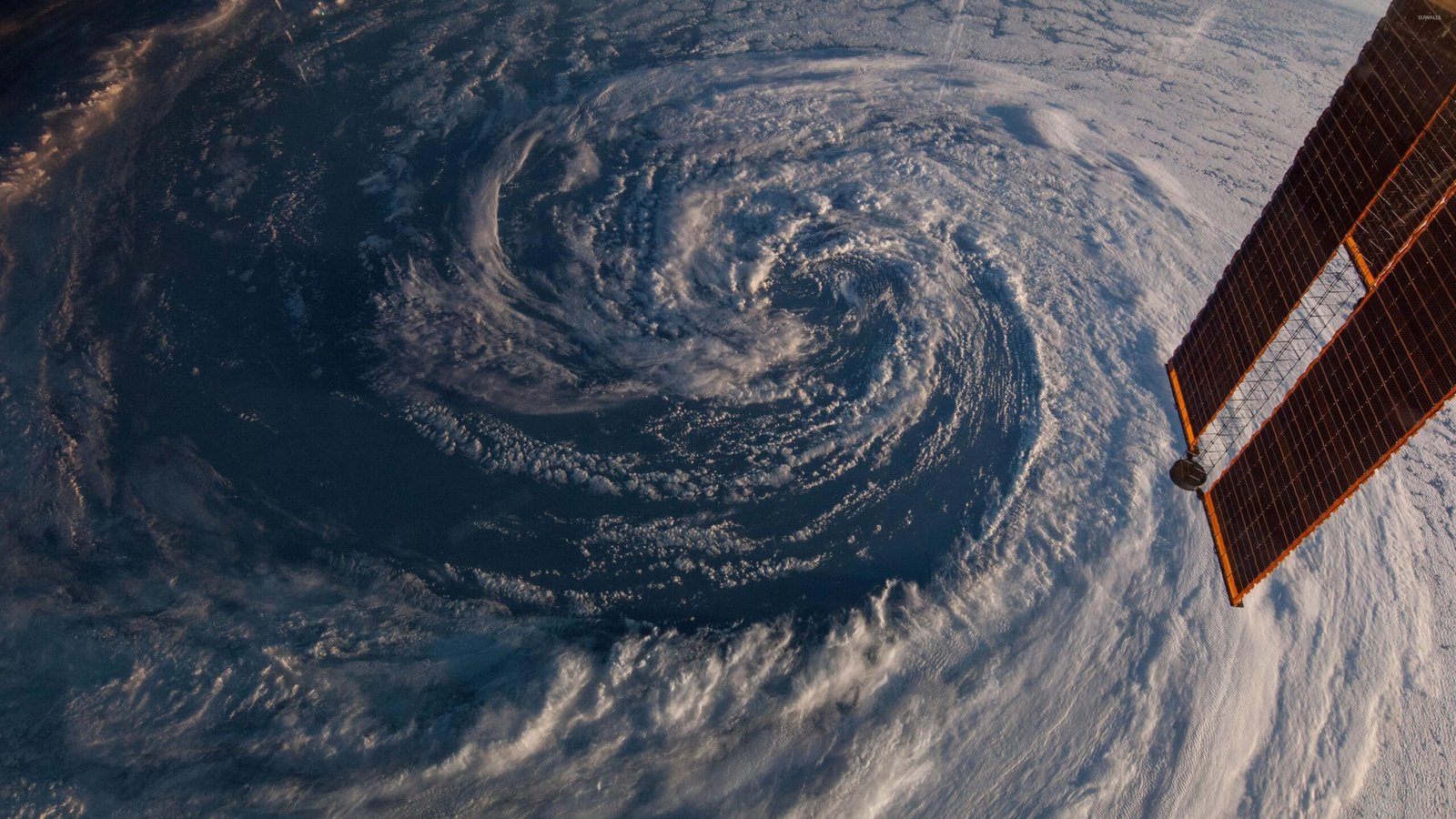
Introduction: The Next Chapter of Space Exploration Is Already Being Written
Every generation believes it lives in a special moment. In science, that belief is sometimes warranted and sometimes inflated. But in astronomy and space exploration right now, the case for genuine historical significance is difficult to argue against. The instruments being built, the missions being planned, and the spacecraft already in transit represent a concentration of scientific ambition unlike anything since the great observatory programs of the late twentieth century — and in several cases, they go far beyond even those benchmarks.
We are living in the era of the James Webb Space Telescope, a machine so powerful it is forcing cosmologists to revise fundamental assumptions about how the early universe formed. We are living in the era of the Event Horizon Telescope, which has photographed actual black holes. We are living in the era of the Perseverance rover, which is collecting rock samples from Mars that may contain evidence of ancient life. Each of these represents a leap so significant that the field of astronomy can be divided into before and after its arrival.
And yet, as extraordinary as the current moment is, what is coming next may be even more transformative. The upcoming space missions entering development, final construction, or early operational phases over the next decade are targeting questions that previous instruments could not even properly formulate. They are going to places no spacecraft has visited, carrying instruments of sensitivity and resolution that push against the theoretical limits of what physics allows, and asking questions whose answers could fundamentally reshape how humanity understands its place in the cosmos.
Here are the seven upcoming space missions that have the greatest potential to change astronomy — and our understanding of the universe — forever.
1. The Nancy Grace Roman Space Telescope: Webb’s Wide-Angle Partner
The James Webb Space Telescope is the most sensitive space observatory ever built, but sensitivity and field of view exist in tension — Webb sees in extraordinary detail but covers a very small patch of sky at any one time. NASA’s Nancy Grace Roman Space Telescope, named in honor of NASA’s first Chief of Astronomy and one of the key architects of the Hubble program, is designed to complement Webb by doing something Webb cannot: surveying enormous swaths of the sky with near-infrared sensitivity, building a statistical picture of the cosmos at a scale no single deep-field observation can provide.
Roman’s primary mirror is the same diameter as Hubble’s — 2.4 meters — but its field of view is 100 times larger. Where Hubble captures a tiny postage-stamp patch of sky, Roman will image broad panoramas, building a mosaic of the universe that will contain hundreds of millions of galaxies in a single survey. This wide-field capability makes Roman uniquely suited to tackle two of the deepest unsolved problems in modern physics: the nature of dark energy and the distribution of dark matter.
Hunting Dark Energy Across Cosmic Time
Dark energy — the mysterious repulsive force believed to be driving the accelerating expansion of the universe — accounts for approximately 68 percent of the total energy content of the cosmos, yet its fundamental nature remains completely unknown. Roman will measure the distances and recession velocities of hundreds of millions of galaxies across billions of light-years, building a three-dimensional map of the universe’s expansion history that will allow physicists to test competing dark energy theories with unprecedented precision. It will also conduct a gravitational microlensing survey toward the center of the Milky Way, potentially detecting thousands of exoplanets — including Earth-mass worlds in distant orbits that current transit detection methods miss entirely. Expected to launch in the late 2020s, Roman stands as one of the most scientifically versatile upcoming space missions in NASA’s portfolio.
2. The Vera C. Rubin Observatory: Ten Years, the Entire Southern Sky
Strictly speaking, the Vera C. Rubin Observatory is not a space mission — it is a ground-based facility being built on a mountain in the Chilean Andes. But its scientific scope and transformative potential place it firmly among the upcoming space missions and projects that will reshape astronomy in the coming decade, and its data will be intimately integrated with the space-based observatories it operates alongside.
When Rubin’s Legacy Survey of Space and Time — known as LSST — begins full operations, it will photograph the entire visible southern sky every three nights for ten years, using the world’s largest digital camera, a 3.2-gigapixel instrument the size of a small car. Every three-night cycle will produce a new complete map of the southern sky, which, when compared to previous cycles, will reveal everything that has moved, brightened, dimmed, or appeared for the first time. Over a decade, Rubin will catalog approximately 20 billion galaxies, discover millions of asteroids and other solar system objects, detect hundreds of thousands of supernovae, and map the large-scale structure of the universe in depth and detail never previously attempted.
The Solar System’s Guardian
Beyond its cosmological science, Rubin will serve as Earth’s most comprehensive early warning system for potentially hazardous asteroids. It is expected to discover more near-Earth objects in its first year of operation than have been found in all of previous astronomical history combined. For planetary defense — the effort to detect and characterize asteroids that could threaten Earth — Rubin’s decade-long sky survey represents a transformational capability upgrade. Any object on a collision course with Earth that is large enough to cause significant damage and bright enough to detect will almost certainly be found by Rubin years or decades before impact, providing humanity with the warning time needed to plan a deflection response.
3. The Europa Clipper: Answering the Question of Life in Our Own Solar System
NASA’s Europa Clipper was launched in October 2024 aboard a SpaceX Falcon Heavy rocket and is currently in transit toward the Jupiter system, where it will arrive in April 2030. Its target is Jupiter’s moon Europa — a world that has captivated planetary scientists for decades as arguably the most promising candidate for extraterrestrial life in the solar system, thanks to a vast liquid water ocean believed to exist beneath its icy crust.
Europa Clipper is not designed to confirm life — it is designed to determine whether Europa’s ocean is habitable, which is the necessary first step in any credible search for biology. The spacecraft carries nine science instruments optimized to characterize the ocean’s depth, chemistry, and interaction with the icy shell above it, to identify regions of recent geological activity on the surface, and to sample any water vapor plumes that may be venting material from the ocean directly into space.
What a Positive Habitability Result Would Mean
Among all the upcoming space missions currently in development or transit, Europa Clipper carries perhaps the greatest potential for a result that would permanently alter humanity’s philosophical self-understanding. If Clipper’s instruments confirm an ocean with the chemical energy sources, molecular building blocks, and physical stability required for life, the scientific community will immediately begin planning follow-on missions with the explicit mandate to search for biological signatures. The detection of life in Europa’s ocean — even microbial life, even the molecular remnants of life — would constitute the most significant scientific discovery in the history of civilization, demonstrating that life is not a singular accident confined to Earth but a phenomenon the universe produces wherever conditions permit.
4. The Mars Sample Return Mission: Bringing the Red Planet to Earth
NASA’s Perseverance rover has been collecting rock core samples from the floor of Jezero Crater — an ancient river delta on Mars — since landing in February 2021. The samples it has sealed into titanium tubes represent the most carefully selected collection of extraterrestrial material ever assembled, chosen specifically from geological formations that formed in the presence of liquid water billions of years ago and that have the highest likelihood of preserving evidence of any ancient microbial life that may have existed there. But Perseverance cannot analyze these samples with the detail the science demands. That requires laboratories on Earth.
The Mars Sample Return mission — a joint initiative between NASA and the European Space Agency — is the most complex and ambitious robotic space exploration project ever attempted. It involves multiple spacecraft performing tasks that have never been done before: a lander with a small rocket called the Mars Ascent Vehicle that will launch the sample tubes from the Martian surface into Mars orbit, a European-built Earth Return Orbiter that will rendezvous with the sample container in Mars orbit and capture it, and a precision return to Earth that delivers the samples safely into a receiving facility where they can be analyzed under strict contamination controls.
The Science That Cannot Be Done Anywhere But Earth
The reason for this elaborate and expensive retrieval operation is simple: the analytical techniques capable of detecting ancient microbial life at the molecular level — examining isotopic ratios in individual mineral grains, identifying specific organic molecules at parts-per-trillion concentrations, analyzing microscopic structures for biological origin — require laboratory equipment that cannot be miniaturized enough to fly to Mars. The information locked inside Perseverance’s sample tubes may already include evidence of ancient Martian life. We will not know until the samples reach terrestrial laboratories, making Mars Sample Return one of the most scientifically consequential upcoming space missions in the history of planetary science.
5. ESA’s LISA: Listening to the Universe in Gravitational Waves From Space
In September 2015, the LIGO gravitational wave detector registered a signal that had traveled 1.3 billion light-years — the spacetime ripple produced by two black holes spiraling together and merging in a collision of incomprehensible violence. The detection opened an entirely new observational window on the universe, one that complements all electromagnetic astronomy because gravitational waves pass through matter without being absorbed, scattered, or blocked. They carry information about events and objects that produce no light at all.
LIGO and its partner detectors on Earth are extraordinary instruments, but they are physically constrained by the planet they sit on. The ground vibrates — from traffic, ocean waves, and seismic activity — creating noise that limits the frequencies of gravitational waves these detectors can sense. The most scientifically rich gravitational wave sources — supermassive black hole mergers, the inspiral of compact objects over millions of years, the gravitational signal from the very early universe — produce waves at frequencies far too low for any ground-based detector to register.
The Laser Interferometer Space Antenna
ESA’s Laser Interferometer Space Antenna, known as LISA, will solve this problem by moving the gravitational wave detector into space. LISA will consist of three spacecraft flying in a triangular formation approximately 2.5 million kilometers apart — a triangle so large that the entire Earth-Moon system would fit comfortably inside one of its sides. Laser beams bouncing between the spacecraft will measure changes in the distances between them caused by passing gravitational waves with a sensitivity capable of detecting fluctuations smaller than one-thousandth the diameter of an atomic nucleus. Expected to launch in the mid-2030s, LISA will detect gravitational waves from supermassive black hole mergers across cosmic distances, map the gravitational wave background left by processes in the very early universe, and potentially reveal entirely new classes of astronomical objects. It represents one of the most technically extraordinary upcoming space missions ever conceived.
6. The Habitable Worlds Observatory: The Telescope Built to Find Another Earth
NASA’s Habitable Worlds Observatory, currently in the conceptual development and community planning phase, represents the next generation beyond the Roman Space Telescope in the quest to find and characterize Earth-like planets around other stars. Its defining mission objective is both simple to state and staggeringly difficult to achieve: directly image Earth-sized planets in the habitable zones of Sun-like stars, and analyze their atmospheres for the chemical signatures of life.
The challenge is one of contrast. A star is billions of times brighter than the planets orbiting it. Detecting an Earth-sized planet next to its host star in direct imaging is equivalent to trying to spot a firefly hovering next to a searchlight from miles away, while the searchlight is pointing directly at you. The Habitable Worlds Observatory will use advanced coronagraph technology — instruments designed to block stellar light with extraordinary precision — combined with a mirror large enough to achieve the angular resolution needed to separate a planet from its star at the distances of nearby stellar systems.
What Direct Imaging of Exoplanet Atmospheres Could Tell Us
If the Habitable Worlds Observatory achieves its design goals, it will be able to obtain spectra — detailed chemical fingerprints — of the atmospheres of dozens of potentially habitable exoplanets around nearby stars. Finding oxygen and methane together in an exoplanet’s atmosphere would be a powerful indication of biological activity, because these two molecules react with each other and cannot coexist in equilibrium without a constant replenishing source. Finding water vapor, ozone, and nitrous oxide in combinations consistent with a biosphere would be even more compelling. This mission has the theoretical capability to answer, with observational evidence rather than speculation, the question that has occupied human imagination for millennia: Is there life on other worlds?
7. Artemis and the Lunar South Pole: Opening a New Era of Human Science
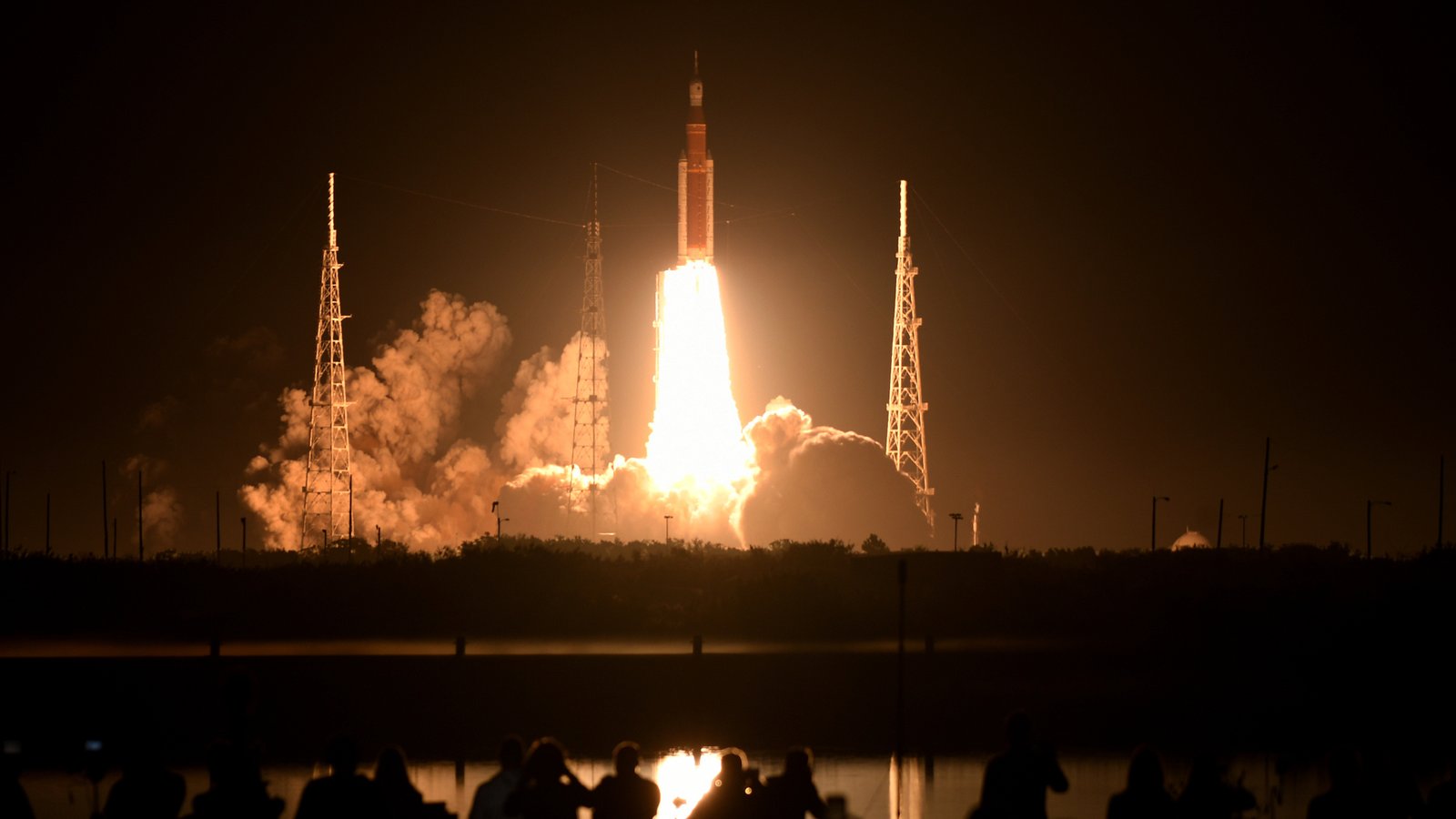
NASA’s Artemis program — the effort to return human beings to the Moon for the first time since 1972 — appears in this list not merely as a human achievement but as a scientific one. The Artemis missions are targeting the lunar south pole, a region that has never been visited by human explorers and that contains, in its permanently shadowed craters, water ice preserved at temperatures near absolute zero for potentially billions of years.
This ancient ice is scientifically priceless for reasons that extend far beyond its value as a resource. It represents a preserved chemical record of the early solar system — cometary material and asteroidal debris accumulated over four billion years, frozen in place since the Moon was young. Analyzing it could reveal the composition of the solar system’s primordial volatile inventory, clarify the origin of Earth’s water, and potentially identify organic molecules delivered to the inner solar system by the same processes that may have seeded Earth’s prebiotic chemistry. Human geologists on the lunar surface can collect, characterize, and choose samples with a sophistication and judgment that no robotic mission can match.
The Lunar Gateway and the Science of Staying
The Lunar Gateway — the small space station being assembled in lunar orbit as part of the Artemis architecture — will serve as a permanent science platform in deep space, exposing human subjects and experimental payloads to the radiation and microgravity environment beyond Earth’s protective magnetosphere. The medical and biological data generated by extended Gateway operations will be directly applicable to planning the Mars missions that represent the long-term horizon of human space exploration. Artemis, therefore, stands among the upcoming space missions not just as a milestone of human achievement but as a scientific program whose results will resonate across disciplines for decades.
Frequently Asked Questions (FAQ)
Q: What are the most important upcoming space missions launching in the next decade? The most scientifically significant upcoming space missions include NASA’s Nancy Grace Roman Space Telescope for dark energy and exoplanet surveys, the Europa Clipper already in transit to Jupiter’s moon Europa, the Mars Sample Return mission in joint development by NASA and ESA, ESA’s LISA gravitational wave observatory planned for the 2030s, and NASA’s Artemis program returning humans to the Moon. The Vera C. Rubin Observatory in Chile, while ground-based, will also generate transformative astronomical science across the same period.
Q: When will the Europa Clipper reach Jupiter? NASA’s Europa Clipper, launched in October 2024 aboard a SpaceX Falcon Heavy, is expected to arrive at the Jupiter system in April 2030. It will then conduct approximately 49 close flybys of Europa over a four-year primary mission, characterizing the moon’s subsurface ocean, surface chemistry, and geological activity to determine whether Europa’s ocean is habitable.
Q: What is the Mars Sample Return mission, and why does it matter? Mars Sample Return is a joint NASA-ESA mission designed to retrieve rock core samples collected by the Perseverance rover from Jezero Crater on Mars and return them to Earth for detailed laboratory analysis. The mission matters because the analytical techniques capable of detecting evidence of ancient microbial life in rock samples require laboratory equipment that cannot be sent to Mars. The samples may already contain evidence of ancient Martian life — we will only know once they reach terrestrial laboratories.
Q: What is LISA, and how is it different from LIGO? LISA is ESA’s Laser Interferometer Space Antenna — a planned gravitational wave observatory consisting of three spacecraft flying 2.5 million kilometers apart in a triangular formation in space. Unlike LIGO, which detects gravitational waves on the ground and is limited by seismic noise to higher frequencies, LISA will detect lower-frequency gravitational waves from supermassive black hole mergers and early universe processes that are completely inaccessible to ground-based detectors. LISA is expected to launch in the mid-2030s.
Q: What is the Habitable Worlds Observatory, and could it find alien life? The Habitable Worlds Observatory is a next-generation NASA space telescope concept designed to directly image Earth-sized exoplanets in the habitable zones of nearby Sun-like stars and analyze their atmospheres for biosignatures — chemical signatures of life such as oxygen, methane, and water vapor in biologically indicative combinations. If built to its design specifications, it would represent the first instrument with a realistic theoretical capability to detect atmospheric evidence of life on another planet.
Conclusion: We Are Living at the Beginning of the Age of Answers
For most of human history, the great questions of astronomy were purely philosophical. Is the universe infinite? Are there other worlds like Earth? Is there life beyond our planet? Are we alone? These were questions for poets and philosophers as much as scientists, because the instruments required to answer them observationally simply did not exist. The universe was magnificent but mostly opaque, revealing just enough of itself to fire the imagination while withholding the deeper truths.
That era is ending. The seven upcoming space missions described in this article are not merely going to add data points to existing models. Several of them are genuinely capable of delivering answers — real, observational, empirically grounded answers — to questions that have been asked for as long as human beings have been capable of wondering. Is there life on Europa? Are there Earth-like planets with living biospheres around nearby stars? What is dark energy, and why is the universe accelerating? What do gravitational waves from supermassive black hole mergers sound like when the detector is large enough to hear them?
These are not small questions. They are the largest questions science has ever attempted to answer with instruments rather than imagination. And the machines being built to answer them — in clean rooms in California and Maryland and across Europe, on mountaintops in Chile, on launchpads in Florida and Texas — are the most sophisticated scientific tools our civilization has ever produced.
The universe has been keeping its secrets for 13.8 billion years. The next decade of space exploration is going to be the most aggressive and capable attempt in history to make it talk. Whatever it says in response will change us — in our science, in our philosophy, and in the quiet, persistent, profoundly human question of what we are and why we are here.
The answers are coming. We just have to be ready to hear them.
Leave a Reply