
Introduction: Fifty Years Later, We Are Going Back — and This Time, We Are Staying
On December 14, 1972, astronaut Gene Cernan climbed the ladder of the Apollo 17 lunar module, became the last human being to stand on the surface of the Moon, and left behind a plaque that read: “Here man completed his first explorations of the Moon.” The word “first” was deliberately chosen. It was an expression of confidence that humanity would return — that the footprints pressed into the lunar dust that day were the beginning of something, not the end.
Then fifty years passed. Budgets shifted. Priorities changed. The Cold War that had turbocharged the Apollo program faded, and with it the political urgency that had made sending humans to the Moon in eight years not just thinkable but achievable. The Moon receded from human ambition, studied by robots and orbiters but never again touched by human hands.
That is about to change. NASA’s Artemis Mission — named for the twin sister of Apollo in Greek mythology and the goddess of the Moon — is the most comprehensive and ambitious human spaceflight program since Apollo itself. It is not a nostalgic reprise of what was done half a century ago. It is a fundamentally different kind of undertaking, with goals, technologies, and ambitions that go far beyond planting a flag and returning home. Artemis is designed not for a visit but for a sustained presence — a permanent human foothold on the Moon that will serve as the foundation for the next great leap: sending human beings to Mars.
Understanding what the Artemis Mission actually entails, why it matters, and what it could mean for the future of human civilization is one of the most important stories in science today. Here is the real plan.
1. Why the Moon Again? The Strategic Logic Behind Artemis
Before examining the mechanics of NASA’s Artemis Mission, it is worth asking a question that reasonable people genuinely raise: why return to the Moon at all? We have been there. We know what lunar rocks look like. The Moon has no atmosphere, no liquid water on its surface, and no obvious resources that justify the enormous cost of human spaceflight. Why not aim directly for Mars, or focus resources on unmanned science missions that cost a fraction of crewed programs?
The answer reveals a depth of strategic thinking that the Apollo program, magnificent as it was, never needed to engage with. Apollo was a race — a geopolitical sprint to demonstrate technological superiority. It had a finish line, and once crossed, the race was over. Artemis has no finish line because its purpose is not demonstration but capability building. Every system, every technique, every piece of knowledge developed during Artemis missions is being explicitly designed with Mars in mind.
The Moon as a Proving Ground for Mars
The challenges of surviving and operating on Mars are formidable. Astronauts will need life support systems capable of functioning reliably for years without the possibility of emergency resupply from Earth. They will need to produce oxygen, water, and eventually food using local resources. They will need medical systems capable of handling serious health emergencies without access to terrestrial hospitals. They will need habitats shielded from radiation, vehicles capable of traversing rugged terrain, and the psychological resilience to endure isolation of a kind that has no precedent in human spaceflight history.
The Moon provides an opportunity to test every one of these systems with the safety net of a three-day return journey to Earth if something goes catastrophically wrong. At its closest, Mars is 54 million kilometers away — a seven-month journey with no possibility of emergency return. Developing and validating the technologies for long-duration planetary surface operations on the Moon, where help is relatively close if needed, is not a detour on the road to Mars. It is an essential preparatory stage. Skipping it would be like attempting to swim the English Channel without learning to swim first.
2. The Space Launch System: The Rocket That Makes It Possible
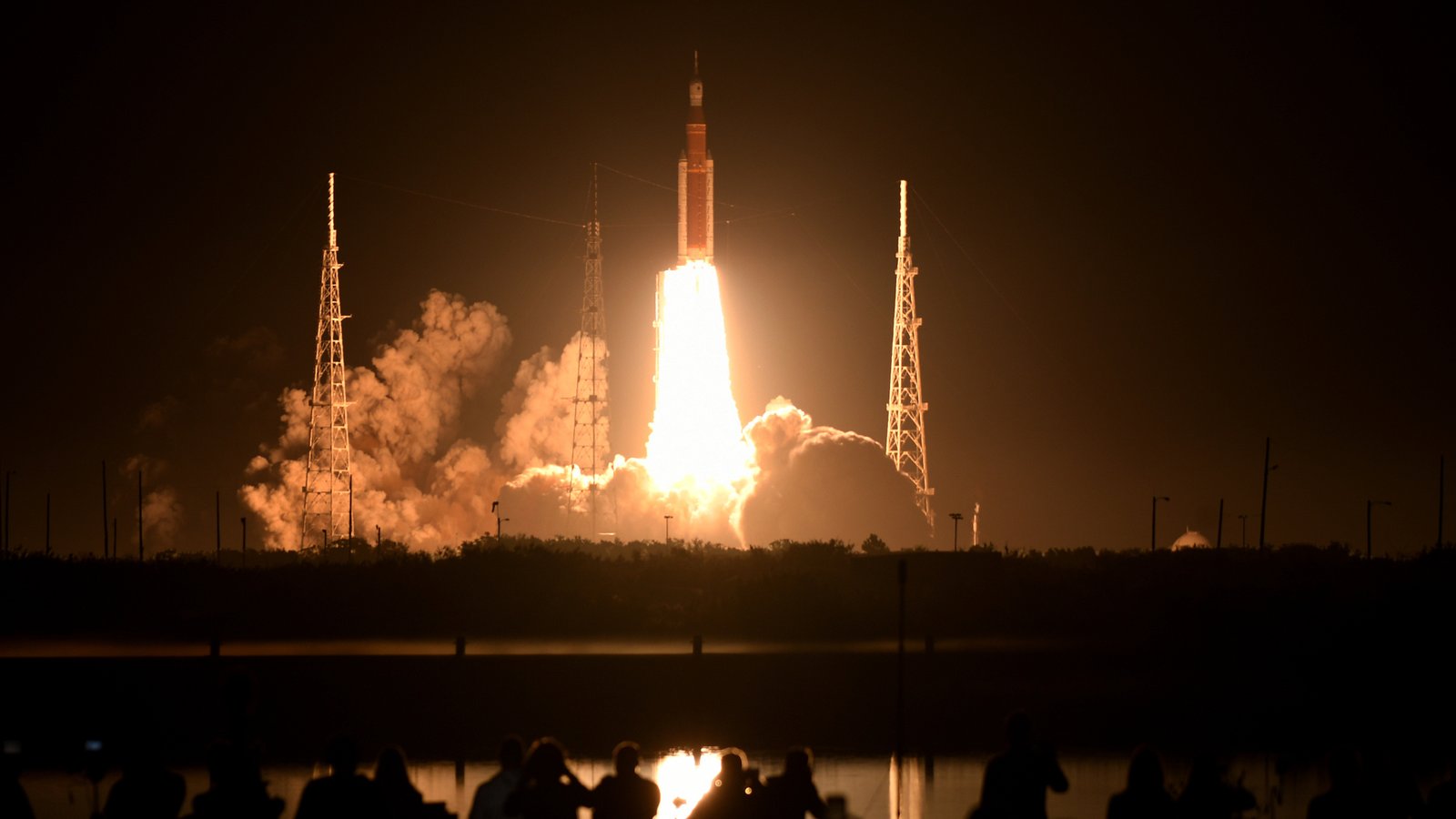
At the center of NASA’s Artemis Mission is the most powerful rocket NASA has built since the Saturn V. The Space Launch System, or SLS, is a massive heavy-lift launch vehicle that exists for a singular purpose: carrying the Orion crew capsule and its astronauts beyond Earth orbit and toward the Moon. It stands approximately 98 meters tall in its Block 1 configuration and generates 8.8 million pounds of thrust at liftoff — more than the Space Shuttle’s main engines and solid rocket boosters combined.
The SLS uses a core stage powered by four RS-25 engines — engines originally developed for the Space Shuttle program and upgraded for their new role on Artemis. Two solid rocket boosters, each taller than the Statue of Liberty, provide additional thrust during the critical first two minutes of flight. Together, they give the SLS the energy needed to escape Earth’s gravity well and send Orion on a trajectory toward the Moon.
The Orion Spacecraft: Built for Deep Space
Riding atop the SLS is the Orion crew capsule, the spacecraft that will carry up to four astronauts from Earth orbit to the vicinity of the Moon and back. Orion is a fundamentally different vehicle from the Apollo command module it superficially resembles. It is larger, carrying four crew members compared to Apollo’s three. Its heat shield, tested on Artemis I’s uncrewed return through Earth’s atmosphere at speeds exceeding 40,000 kilometers per hour, is the largest of its kind ever built and must withstand temperatures approaching 2,760 degrees Celsius during reentry from lunar return trajectories.
Orion incorporates life support, navigation, and communications systems that draw on five decades of advances in aerospace engineering since Apollo. It is designed for missions lasting up to 21 days in deep space — sufficient for the transit to the Moon, surface operations time, and return journey that future Artemis missions will require. The European Space Agency contributes the European Service Module, which provides Orion’s propulsion, power, and thermal control, representing the kind of international partnership that defines the Artemis program’s collaborative character.
3. Artemis I and II: Building Confidence Before Putting Crew on Board
NASA’s approach to Artemis has been deliberately methodical — building confidence in each system through a sequence of increasingly demanding missions before committing crew to the most challenging phases.
Artemis I, launched in November 2022 after years of delays and technical challenges, was an uncrewed demonstration of the complete SLS and Orion system. The mission sent an uncrewed Orion capsule on a 25-day journey to the Moon, including a distant retrograde orbit that took the spacecraft more than 430,000 kilometers from Earth — further than any human-rated spacecraft has ever traveled. Orion completed the mission and returned to Earth, its heat shield performing successfully during the high-speed atmospheric reentry that is one of the most dangerous phases of any lunar return mission.
Artemis II represents the next major step: the first crewed flight of the SLS and Orion system. The four-person crew — including Canadian astronaut Jeremy Hansen, making it the first non-American to travel to the Moon — will fly a free-return trajectory around the Moon without landing, testing the life support systems and crew operations procedures that Artemis III and subsequent landing missions will depend on. The experience accumulated during Artemis II will validate that the Orion spacecraft is truly ready to support human life in the deep space environment between Earth and Moon.
The Importance of Incremental Validation
This step-by-step approach reflects hard lessons learned from the history of human spaceflight. Apollo 1 killed three astronauts in a launch pad fire. The Space Shuttle’s Challenger and Columbia disasters each claimed seven lives, partly because schedule pressure and organizational culture allowed known risks to accumulate without adequate resolution. NASA’s decision to fly an uncrewed Artemis I before risking a crew is not excessive caution — it is the application of hard-won wisdom about what careful engineering discipline looks like in practice.
4. Artemis III: The Mission That Will Make History
Artemis III is the mission that will return human beings to the lunar surface for the first time since Gene Cernan’s departure in 1972. Its significance is difficult to overstate. It will carry astronauts — including the first woman and first person of color to stand on the Moon — to the lunar south pole, a region of the Moon that no human being has ever visited and that the Apollo missions never explored.
The choice of the lunar south pole is not arbitrary or symbolic. It is scientifically and strategically crucial. Permanently shadowed craters near the lunar poles contain water ice — confirmed by NASA’s LCROSS mission in 2009 and subsequently mapped in increasing detail by orbital spacecraft. This water ice, preserved for billions of years in craters where sunlight never penetrates, and temperatures never rise above minus 173 degrees Celsius, represents one of the most valuable resources in the entire inner solar system.
Water Ice: The Resource That Changes Everything
Water ice at the lunar south pole can be processed into drinking water for astronauts, oxygen for breathing, and hydrogen for rocket fuel — all without bringing these enormously heavy consumables from Earth. The ability to produce propellant from lunar ice would dramatically reduce the cost and complexity of lunar operations, and could eventually enable the Moon to serve as a fueling depot for missions to Mars and the outer solar system. A rocket launched from the Moon’s surface — where gravity is only one-sixth that of Earth — requires far less energy to reach orbit than one launched from Earth. If that rocket can be fueled with locally produced propellant, the economics of deep space exploration change fundamentally.
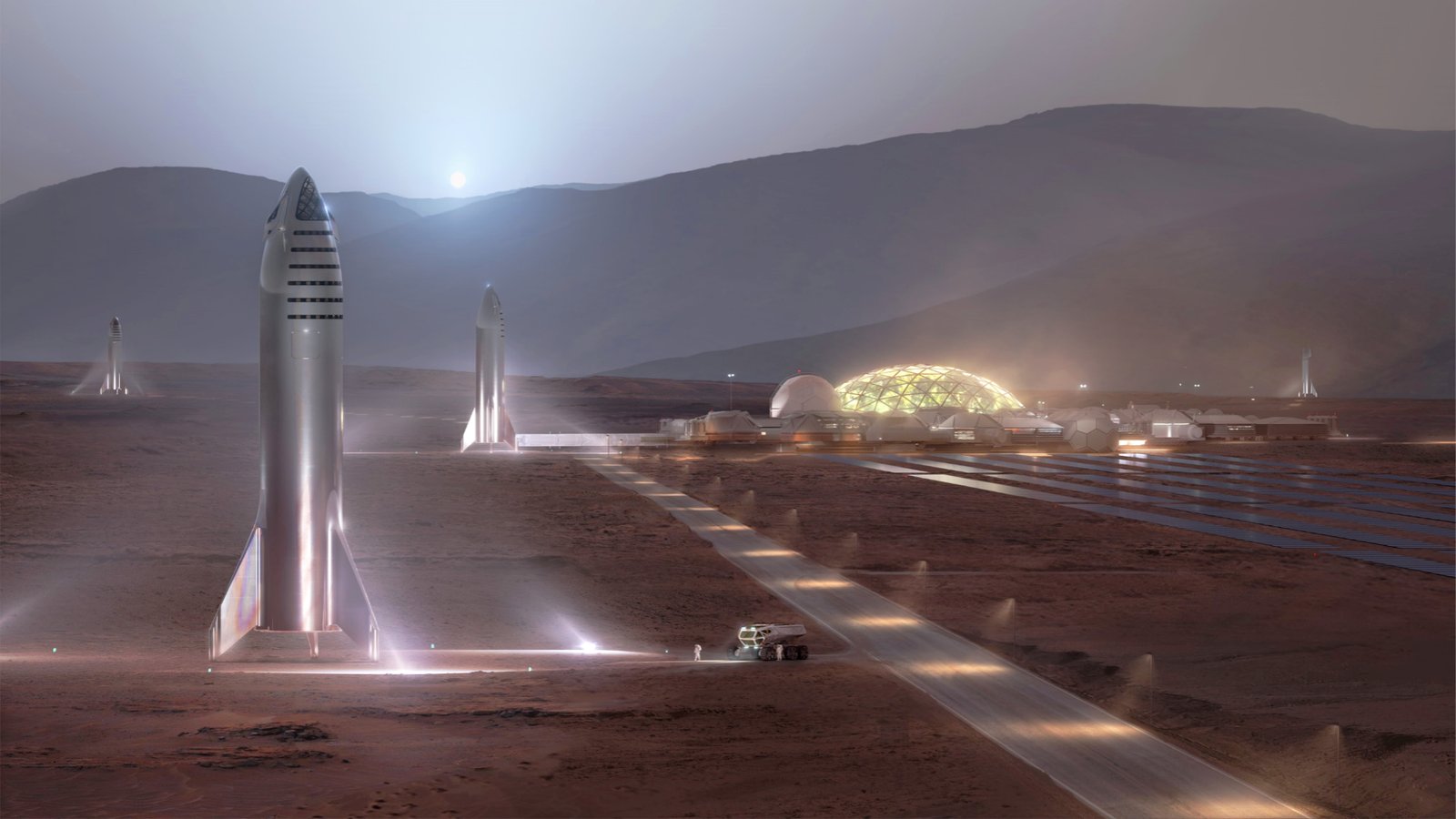
The Artemis III landing will use a modified version of SpaceX’s Starship as the Human Landing System — the vehicle that will carry astronauts from lunar orbit down to the surface and back up again for rendezvous with Orion. NASA selected SpaceX’s proposal over competing designs in April 2021, a decision that brought the immense engineering momentum of the SpaceX Starship program into direct service of the Artemis mission objectives and created a productive alignment between NASA’s institutional expertise and SpaceX’s rapid development culture.
5. The Lunar Gateway: Humanity’s First Deep Space Space Station
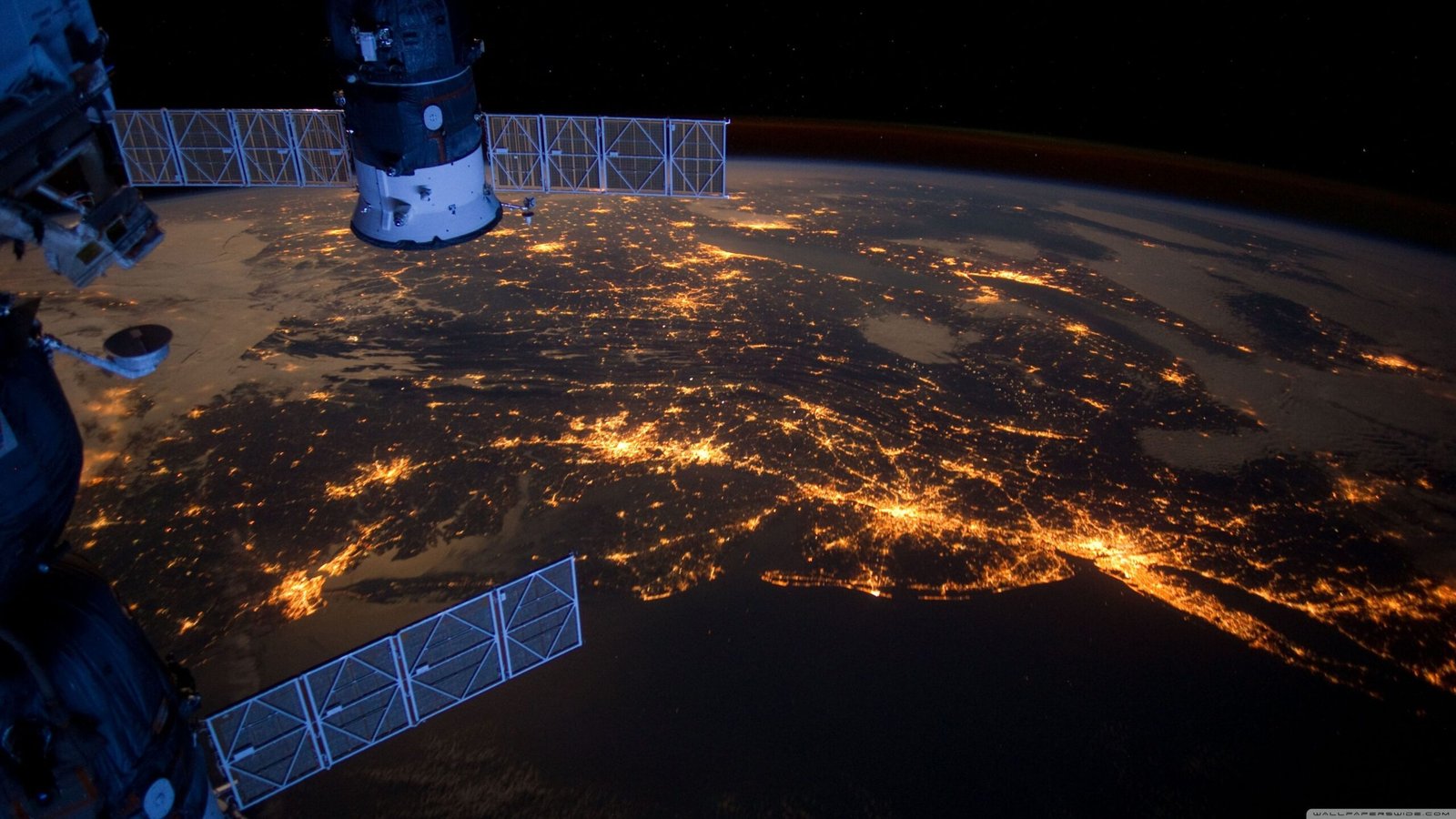
One of the most consequential and least publicly discussed elements of NASA’s Artemis Mission is the Lunar Gateway — a small, modular space station that will be built and maintained in a near-rectilinear halo orbit around the Moon. Unlike the International Space Station, which orbits Earth at an altitude of approximately 400 kilometers, the Gateway will operate in lunar orbit, serving as a waypoint, laboratory, and staging post for surface missions.
The Gateway is being developed as an international collaboration involving NASA, the European Space Agency, the Japan Aerospace Exploration Agency, the Canadian Space Agency, and other international partners. Its power and propulsion element will use solar electric propulsion to maintain its orbit, while habitation modules will provide living quarters and laboratory space for visiting crews. The Gateway is not designed for permanent continuous habitation — crews will visit it for periods of weeks to months during active surface operation campaigns, and it will operate autonomously between crewed visits.
Why a Lunar Space Station Changes the Strategic Picture
The Gateway provides several capabilities that surface missions alone cannot. It serves as a communications relay for surface operations on the lunar far side, which has no direct line of sight to Earth. It provides a staging point where crew and cargo delivered by different launch vehicles can be assembled before descent to the surface — reducing the demands on any individual launch. It serves as a refuge in the event of an emergency requiring surface crew evacuation. And it accumulates the operational experience of maintaining a space station in the deep space radiation environment beyond Earth’s protective magnetosphere — experience that will be directly applicable to the transit habitats needed for Mars missions.
6. Artemis and the Road to Mars: The Long Game
NASA has been explicit from the program’s inception that Artemis is not the destination — it is the pathway. Every technology being developed for Artemis, every operational lesson being learned, every international partnership being built is being designed with the explicit long-term objective of sending humans to Mars. The timeline for crewed Mars missions under NASA’s current planning extends into the late 2030s and early 2040s, but the foundations being laid through Artemis are indispensable prerequisites.
Long-duration surface operations on the Moon will validate life support systems designed to function for years without resupply. In-situ resource utilization — the extraction of oxygen and water from lunar ice — will prove out the technologies needed to produce consumables on Mars from local resources. The human health data accumulated by astronauts spending extended periods on the lunar surface, exposed to reduced gravity and elevated radiation, will inform medical protocols and countermeasures for the far longer Mars missions ahead.
The Commercial Lunar Economy: A New Space Industry
Beyond NASA’s own program, Artemis is catalyzing a broader commercial lunar economy that is accelerating the development of capabilities NASA could not afford to develop alone. NASA’s Commercial Lunar Payload Services program has contracted with multiple private companies to deliver science and technology payloads to the lunar surface in advance of crewed missions. Companies including Astrobotic, Intuitive Machines, and Firefly Aerospace are developing lunar landers and surface systems that will build the logistical infrastructure of regular lunar access. In February 2024, Intuitive Machines’ IM-1 mission became the first American spacecraft to soft-land on the Moon since Apollo 17 — a landmark achievement for commercial spaceflight and a demonstration that the commercial side of the Artemis ecosystem is delivering real results.
Frequently Asked Questions (FAQ)
Q: What is NASA’s Artemis Mission, and what is its main goal? NASA’s Artemis Mission is a human spaceflight program designed to return astronauts to the Moon — specifically to the lunar south pole — for the first time since 1972. Its primary goals are to establish a sustainable human presence on and around the Moon, develop and test the technologies needed for long-duration deep space missions, and build the experience and infrastructure required to eventually send humans to Mars. The program is named after the twin sister of Apollo in Greek mythology.
Q: Who will be the first woman on the Moon through Artemis? NASA has committed that the Artemis program will land the first woman on the Moon, but the specific astronaut assigned to the Artemis III surface mission has not been permanently finalized as of early 2026, as the mission date has been subject to schedule adjustments. NASA’s current astronaut corps includes several highly qualified women who are in training for Artemis missions, and the selection will be formally announced closer to the mission date.
Q: What is the SpaceX Starship’s role in the Artemis Mission? SpaceX’s Starship Human Landing System has been selected by NASA as the vehicle that will carry Artemis astronauts from lunar orbit down to the lunar surface and back up again for rendezvous with the Orion crew capsule. NASA selected SpaceX’s proposal in April 2021 after a competitive bidding process. The lunar Starship variant is a modified version of the Starship upper stage optimized for lunar surface operations and does not require the heat shield and atmospheric reentry systems of the Mars-bound version.
Q: What is the Lunar Gateway, and why is it important for Artemis? The Lunar Gateway is a small, modular space station being built in lunar orbit as part of the Artemis program, developed in collaboration with international partners including ESA, JAXA, and the Canadian Space Agency. It will serve as a waypoint and staging post for lunar surface missions, a communications relay, a scientific laboratory, and a refuge for surface crews in emergencies. Its operation in the deep space radiation environment beyond Earth’s magnetosphere will also provide invaluable experience for designing the transit habitats needed for Mars missions.
Q: How does Artemis differ from the original Apollo program? While both programs aim to land humans on the Moon, they differ fundamentally in purpose, scope, and design. Apollo was primarily a geopolitical demonstration mission with limited scientific objectives and no intention of establishing a permanent presence. Artemis is designed for sustainability — building the infrastructure, operational experience, and technological capabilities for a long-term human presence on and around the Moon, and explicitly serving as a stepping stone toward crewed Mars missions. Artemis also involves extensive international partnerships and commercial industry participation that Apollo never incorporated, and targets the scientifically and strategically valuable lunar south pole rather than the equatorial regions visited by Apollo.
Conclusion: The Moon Is Not the Destination — It Is the Beginning
When Gene Cernan climbed that ladder in December 1972, he believed — as the plaque he left behind proclaimed — that humans would return. He expected it to happen in his lifetime. It did not. But the delay, frustrating as it was, may in retrospect prove to have been productive. The technology developed in the intervening decades, the knowledge accumulated by decades of robotic exploration, the international partnerships forged through the International Space Station, the commercial space industry built by SpaceX and others — all of these have made the Artemis program more capable, more sustainable, and more strategically sound than anything that could have been built in the 1970s or 1980s.
NASA’s Artemis Mission is not nostalgia. It is architecture. Every rocket launch, every lunar orbit, every bootprint in the lunar regolith near the south pole is a load-bearing element in a structure being built toward a destination that is not the Moon but the one beyond it — the red dot in the night sky that has haunted human imagination since the first astronomers noticed it moving against the fixed stars.
The Moon is 384,000 kilometers away. Mars is 225 million kilometers away. Both are within the reach of a species that has decided, with growing seriousness and capability, that the universe is not merely something to observe from a distance but somewhere to actually go.
We are going back to the Moon. And this time, we are not leaving a plaque that says “first explorations.” We are building a road.


Leave a Reply