
Introduction: We Are Standing at the Edge of a New Era
There is a moment in every great story when everything changes. For humanity, that moment may already be here.
Right now, in laboratories tucked inside NASA research centers, in SpaceX’s massive production facilities in Texas, and in university engineering departments across the globe, scientists and engineers are quietly building the technologies that will define the next chapter of human existence. These are not distant dreams debated in philosophy classes. They are metal, code, chemistry, and physics — being tested, refined, and launched into the sky with increasing regularity.
We live in a universe so vast that even light, traveling at 300,000 kilometers per second, takes over two million years to reach the nearest large galaxy, Andromeda, from Earth. Yet despite that incomprehensible scale, humanity has already sent spacecraft to the edges of our solar system, landed robots on Mars, and photographed galaxies that formed just a few hundred million years after the Big Bang. The pace of progress is not slowing down. It is accelerating.
Future space technology is not simply about going further into the cosmos. It is about survival, energy, medicine, communication, and the long-term continuity of human civilization. What follows is a look at the most important and awe-inspiring technological developments that are set to change everything — not just up in the stars, but right here on Earth.
1. Reusable Rockets: Making Space Accessible to Everyone
For decades, reaching orbit meant destroying the vehicle that got you there. Rockets were single-use, and the cost of launching even a modest payload into space ran into hundreds of millions of dollars. That economic reality kept space exploration confined to governments and elite agencies. Then the model broke apart — largely because of one company.
SpaceX’s development of reusable rocket technology has arguably been the single most disruptive event in the history of space travel since the Apollo program. The Falcon 9 booster, which routinely lands itself back on a drone ship in the middle of the ocean after delivering payloads to orbit, has already been flown and reflown over twenty times on a single unit. This alone has slashed launch costs by a dramatic margin.
Starship: The Vehicle That Could Take Us to Mars
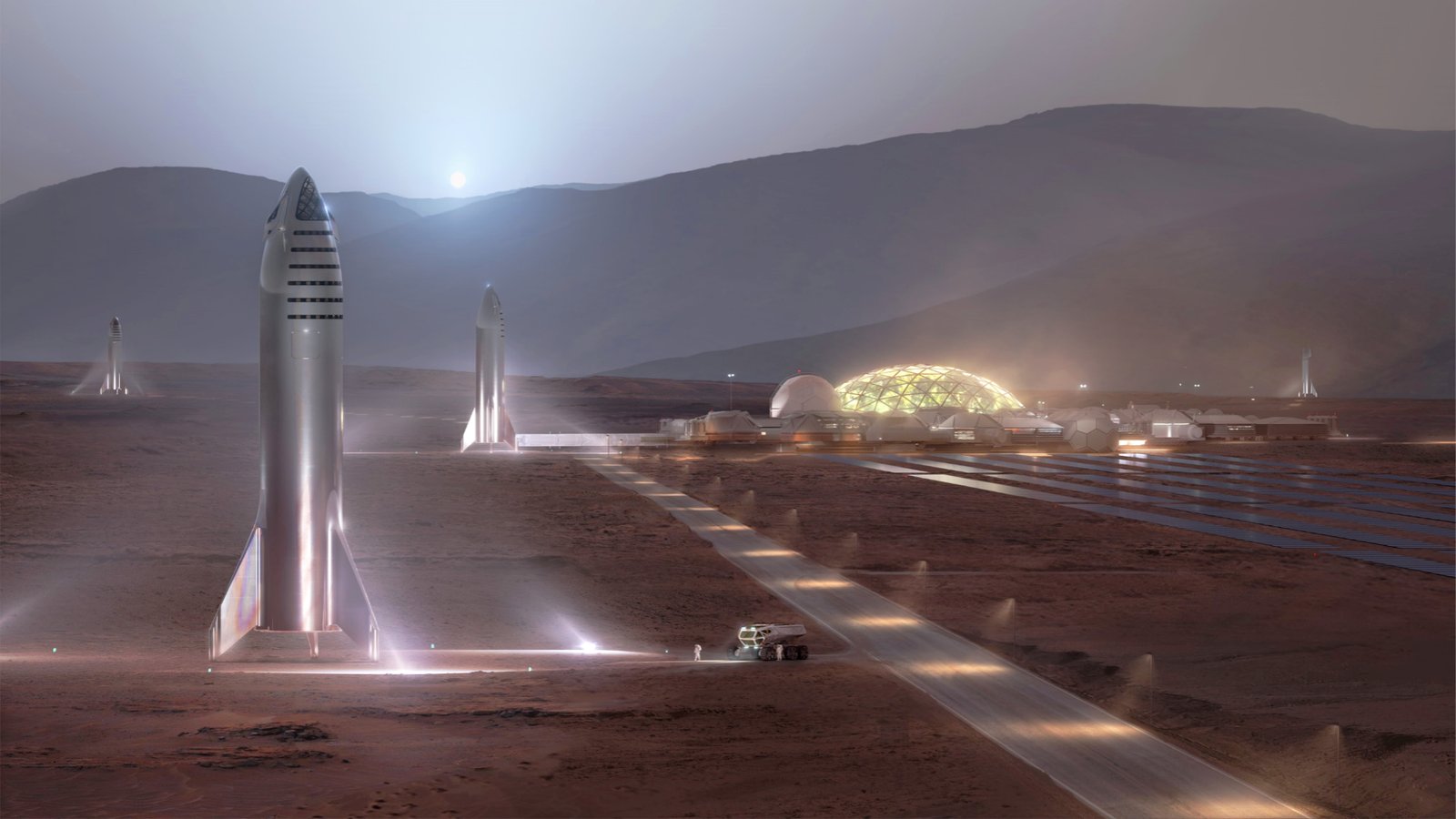
But Falcon 9 is a stepping stone. SpaceX’s Starship — the most powerful rocket ever built — is designed for full and rapid reusability, to make spaceflight as economically routine as commercial aviation. Standing nearly 120 meters tall, Starship is engineered to carry over 100 passengers and massive cargo loads to the Moon, Mars, and beyond. Its Super Heavy booster, producing over 7,600 tonnes of thrust at liftoff, dwarfs anything previously launched in human history.
Elon Musk has repeatedly outlined his vision of establishing a self-sustaining city on Mars within this century, requiring thousands of Starship flights and hundreds of thousands of brave volunteers. Whether or not that timeline proves realistic, the engineering foundation being laid today is real, tested, and increasingly capable.
NASA’s Artemis Program: Back to the Moon, Forward to Mars
NASA’s Artemis program represents the institutional side of this new era. Named after the mythological twin sister of Apollo, Artemis aims to return humans to the lunar surface — this time to stay. The program’s lunar gateway, a small space station being built in Moon orbit, will serve as a staging point for surface missions and, eventually, as a waypoint on the road to Mars. Artemis also represents a historic social milestone: it is designed to land the first woman and first person of color on the Moon’s surface, reflecting a more inclusive vision of who gets to explore the cosmos.
2. Artificial Intelligence in Space: Smarter Missions, Deeper Discoveries
If rockets are the muscles of future space exploration, artificial intelligence is the nervous system. Space environments are unforgiving, communication delays between Earth and distant spacecraft can stretch to over twenty minutes, and the sheer volume of scientific data being collected by modern missions has already surpassed any human team’s ability to analyze manually. AI is not a convenience in this context — it is a necessity.
Autonomous Rovers and the Perseverance Rover’s AI Navigation
NASA’s Perseverance rover, currently exploring the ancient Jezero Crater on Mars, uses an AI-powered navigation system called AutoNav that allows it to plot and drive its own path across rocky terrain without waiting for human instructions from Earth. What once required multiple days of careful planning by a ground team can now be accomplished autonomously in minutes. Future rovers will take this independence even further, conducting geological surveys, analyzing soil chemistry, and making real-time decisions about where to explore next.
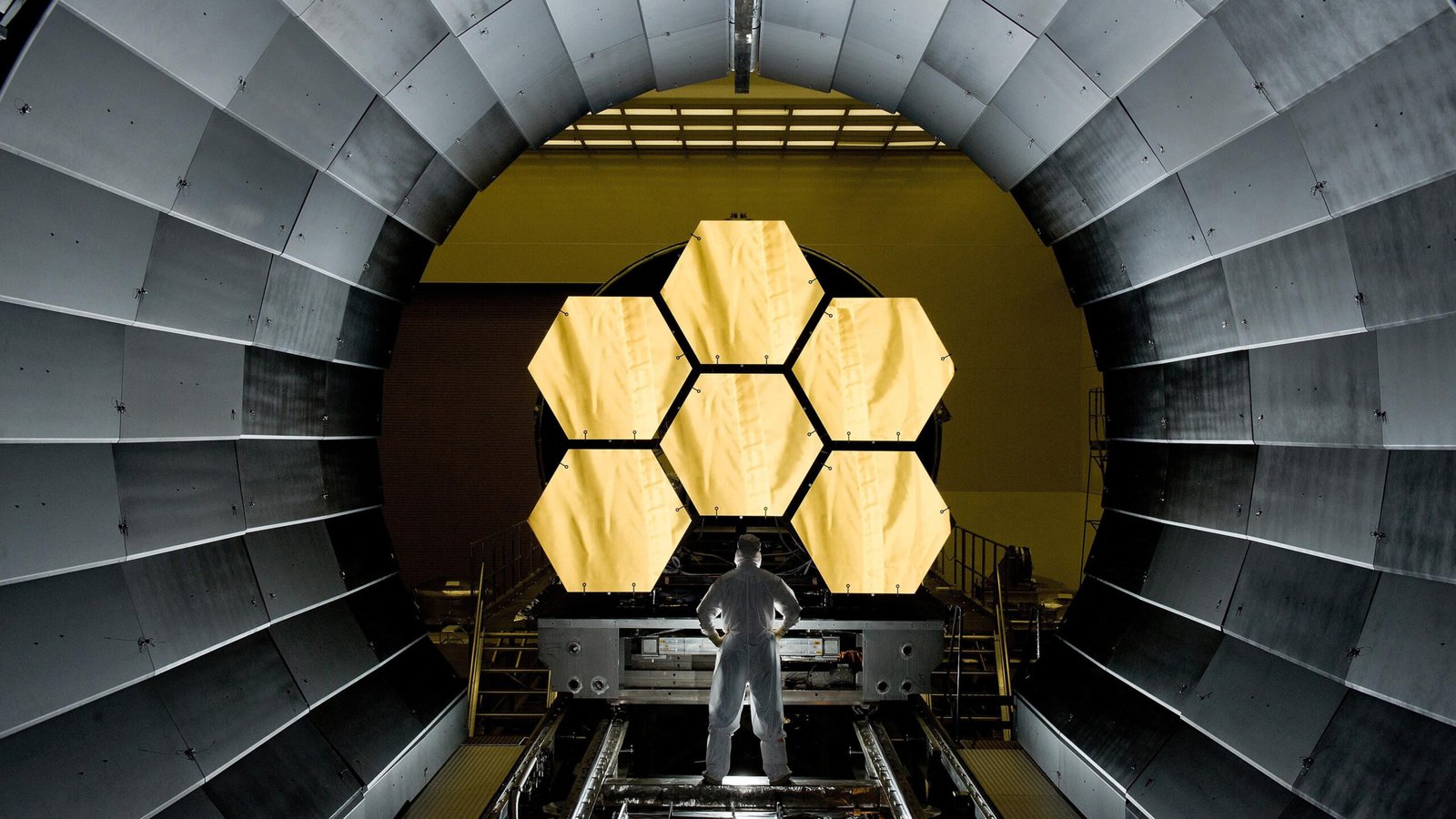
Artificial intelligence is also transforming how we study the universe from afar. Machine learning algorithms scanning data from space telescopes can identify exoplanet transits, classify galaxy morphologies, detect gravitational wave signatures, and flag chemical anomalies in stellar atmospheres — tasks that would take human researchers lifetimes to complete manually. The James Webb Space Telescope, which began delivering science data in 2022, has already imaged galaxies from just 300 million years after the Big Bang. AI tools built on top of Webb’s data pipeline are helping astronomers extract insights at a pace that would have been unimaginable a generation ago.
3. Living in Space: Habitats, 3D Printing, and the Science of Survival
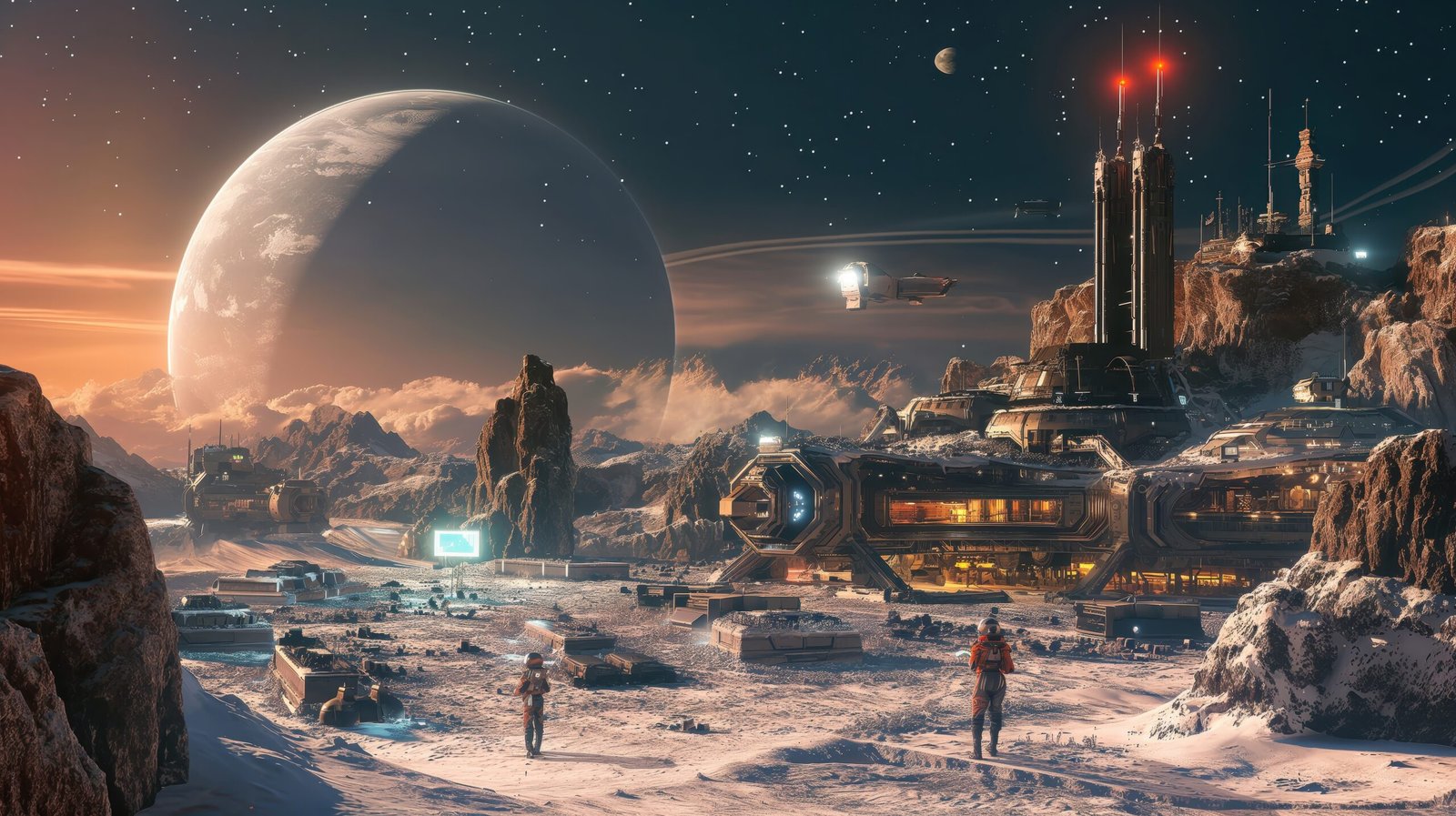
Getting to Mars is an engineering challenge. Living there is an entirely different category of problem. The Martian surface receives roughly twice the radiation exposure found on the International Space Station, surface temperatures can plunge to minus 125 degrees Celsius, and the thin atmosphere — composed mostly of carbon dioxide — is completely unbreathable. Future space technology must solve all of these problems before humans can make the Red Planet home.
In-Situ Resource Utilization: Building With What You Find
The concept of in-situ resource utilization, or ISRU, refers to using materials found on-site rather than shipping everything from Earth, which would be impossibly expensive. On Mars, CO₂ from the atmosphere can be chemically converted into oxygen and rocket fuel. Water ice, confirmed in significant quantities at Mars’s poles and in subsurface deposits, can be split into hydrogen and oxygen. And Martian regolith — the fine dust and rock that blankets the surface — can potentially be used as a raw material for 3D-printed structures.
NASA’s MOXIE instrument aboard Perseverance has already produced breathable oxygen directly from the Martian atmosphere, a quiet but historic demonstration. Robotic 3D printers, sent ahead of any crewed mission, could construct pressurized, radiation-shielded habitats using local materials — meaning astronauts might arrive on Mars to find a home already waiting for them.
4. Advanced Propulsion: Going Further, Going Faster
The distances involved in deep space travel are almost beyond human intuition. Mars is, on average, about 225 million kilometers from Earth. The nearest star system, Alpha Centauri, is approximately 40 trillion kilometers away. With current chemical rocket technology, reaching Alpha Centauri would take roughly 70,000 years. Future space technology is working to change that equation dramatically.
Nuclear Propulsion: Cutting the Journey to Mars in Half
NASA and DARPA are jointly developing nuclear thermal propulsion technology that could cut travel time to Mars from seven months down to approximately 45 days. Instead of burning chemical propellants, nuclear thermal engines heat a propellant — typically hydrogen — using a compact nuclear reactor, expelling it at velocities roughly twice those achievable by conventional rockets. This makes the technology extraordinarily efficient for long-duration missions.
For even more distant targets, nuclear electric propulsion offers another path forward, using nuclear reactors to generate electricity that powers highly efficient ion thrusters. NASA’s Dawn spacecraft demonstrated the power of ion propulsion by successfully orbiting both Vesta and Ceres in the asteroid belt — the first spacecraft ever to orbit two extraterrestrial bodies. Future versions of this technology, scaled up and powered by nuclear reactors, could send robotic probes to the outer solar system in a fraction of the time currently required.
Laser Propulsion and the Dream of Interstellar Travel
Perhaps the most visionary propulsion concept currently under development is the laser-sail approach championed by the Breakthrough Starshot initiative. The project envisions accelerating gram-scale spacecraft — called StarChips — to 20% of the speed of light using a ground-based laser array. At that velocity, a probe could reach Alpha Centauri in approximately 20 years. The concept remains in early development, but the physics is sound, and the investment from serious scientists and technologists is real. It represents humanity’s first concrete step toward the dream of interstellar travel.
5. Quantum Communication: Connecting Worlds Across the Cosmos
In an era where human settlements may eventually span multiple planets, ordinary radio-based communication will face serious limitations. Signal delays, interception risks, and bandwidth constraints will all become critical issues. Quantum communication, which exploits the bizarre phenomenon of quantum entanglement, could offer a transformative alternative.
China’s Micius satellite has already demonstrated quantum-encrypted communication between ground stations over 1,000 kilometers apart, achieving levels of security that are theoretically unbreakable by any classical computing method. As this technology scales and matures, it could enable secure, high-fidelity communication channels between Earth and off-world colonies — a digital nervous system connecting a multi-planetary civilization.
6. The Search for Extraterrestrial Life: The Question That Changes Everything
Of all the scientific endeavors humanity has ever undertaken, none carries more philosophical weight than the search for life beyond Earth. In a universe containing an estimated two trillion galaxies, each harboring hundreds of billions of stars, the odds that life arose only once — here, on this pale blue dot — seem statistically extraordinary.
NASA’s Europa Clipper mission, launched in October 2024, is currently traveling to Jupiter’s moon Europa, which hides a vast liquid water ocean beneath an icy shell. Scientists believe this ocean has been in contact with a rocky seafloor for billions of years — conditions remarkably similar to the hydrothermal vent environments on Earth, where life thrives in total darkness. The Clipper will analyze Europa’s ice plumes for organic molecules and other chemical indicators of biological activity.
Meanwhile, the James Webb Space Telescope is already doing something remarkable: analyzing the atmospheric chemistry of distant exoplanets. By studying which wavelengths of starlight are absorbed as a planet passes in front of its host star, Webb can detect the presence of water vapor, methane, oxygen, and carbon dioxide. The simultaneous presence of oxygen and methane in an exoplanet’s atmosphere would be a powerful biosignature — because the two gases react with each other and would quickly disappear without a constant biological source replenishing them.
The discovery of even microbial life beyond Earth would not merely be a scientific achievement. It would be the most profound moment in the entire history of human thought.
Frequently Asked Questions (FAQ)
Q: What is the most important future space technology in development today? Reusable rockets, AI-powered spacecraft, and nuclear propulsion systems are among the most transformative technologies currently in active development. Together, they form the core infrastructure required for humanity’s expansion into the solar system and, eventually, beyond it.
Q: When could humans actually land on Mars? NASA’s official roadmap targets a crewed Mars mission in the late 2030s or early 2040s. SpaceX has expressed interest in an earlier timeline. Realistic estimates from most space scientists place the first human footstep on Mars somewhere between 2035 and 2045, depending on funding, politics, and technological progress.
Q: How does future space technology benefit people on Earth right now? Space research has already produced GPS navigation, weather forecasting satellites, water purification systems, memory foam, and scratch-resistant eyeglass lenses. Looking ahead, space-based solar power, asteroid mining for rare earth elements, and advanced materials developed for space environments all promise enormous benefits for everyday life on Earth.
Q: Is there any real evidence of life beyond Earth? No confirmed evidence of extraterrestrial life has been found as of early 2026. However, the discovery of organic molecules on Mars, methane fluctuations in its atmosphere, and the strong likelihood of liquid water oceans on moons like Europa and Enceladus make the search increasingly promising. The James Webb Space Telescope is actively studying exoplanet atmospheres for biosignatures.
Q: What is the Breakthrough Starshot project, and is it realistic? Breakthrough Starshot is a well-funded initiative aiming to send tiny laser-propelled probes to Alpha Centauri at 20% the speed of light. The physics is theoretically sound, though significant engineering challenges remain. Most scientists consider it a genuinely viable long-term concept rather than pure speculation.
Conclusion: The Universe Is Patient. Are We Bold Enough to Meet It?
Every great civilization in history has been defined by the frontiers it was willing to explore. The oceans, the continents, the skies — each new horizon revealed a world larger and stranger than the one before. The universe is the ultimate frontier, and for the first time in history, humanity possesses both the knowledge and the tools to begin exploring it in earnest.
Future space technology is not about escaping Earth. It is about understanding it more deeply, protecting it more wisely, and ensuring that the story of human civilization does not end here. The universe has existed for 13.8 billion years. It is unimaginably vast, breathtakingly complex, and — if the mathematics of probability means anything — almost certainly not empty.
The question that drives every rocket launch, every telescope observation, and every late-night engineering session is not just “what is out there?” It is something far more urgent and intimate: “What are we capable of becoming?”
The stars are not decorations. They are destinations. And we are — slowly, brilliantly, stubbornly — learning how to reach them.
Leave a Reply