
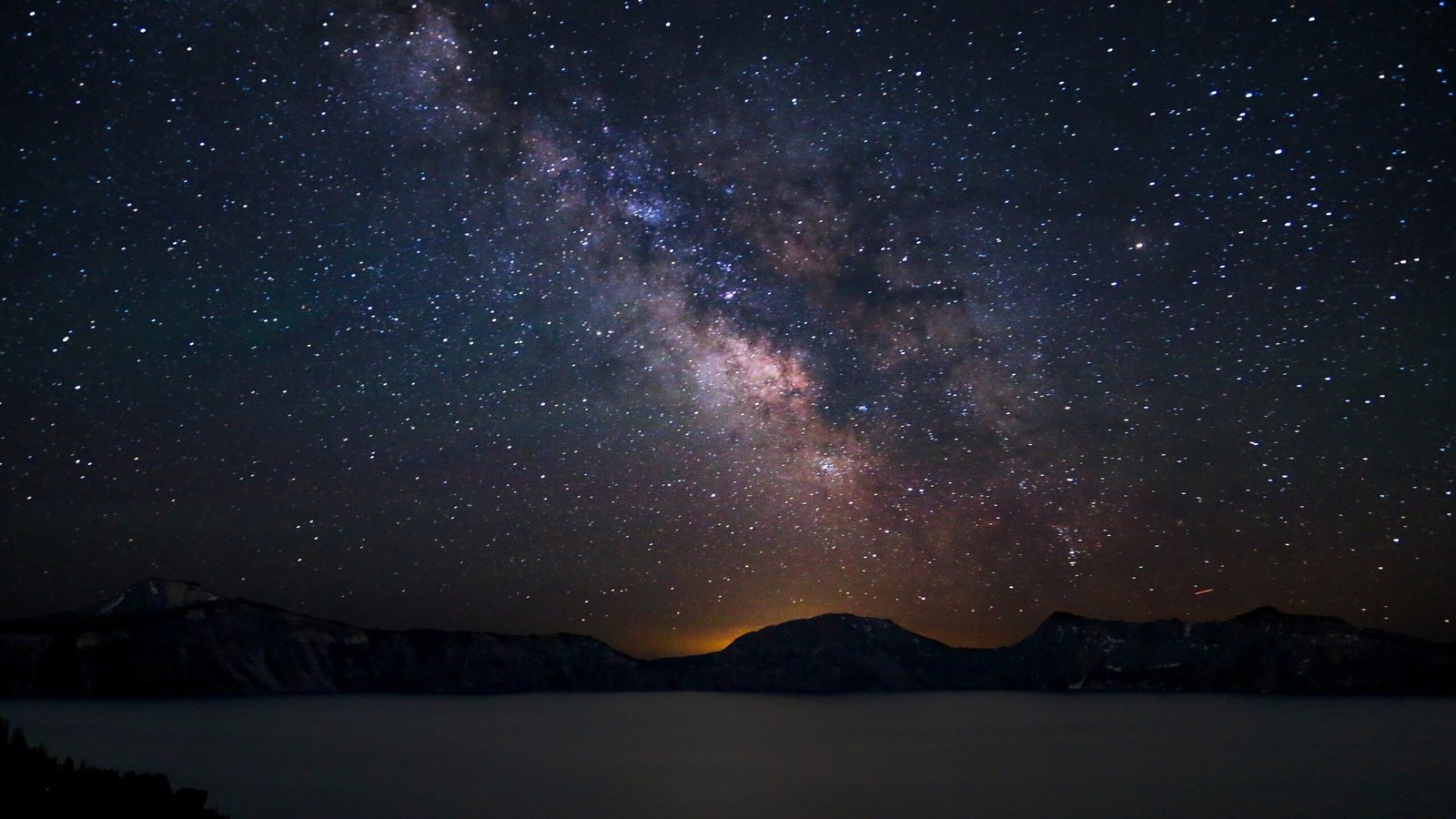
Introduction: Home Is the Strangest Place of All
We live inside one of the most extraordinary structures in the known universe, and we barely understand it.
The Milky Way galaxy is our cosmic home — a vast, spiraling collection of an estimated 200 to 400 billion stars, stretching roughly 100,000 light-years from one edge to the other. It contains ancient stars born just a few hundred million years after the Big Bang, stellar nurseries where new suns are being forged out of gas and dust right now, a supermassive black hole lurking at its center, and somewhere within one of its quieter spiral arms, a modest yellow star with a small rocky planet orbiting it at just the right distance to support something remarkable: curious, questioning life.
You would think that living inside the Milky Way would give us an advantage in studying it. In some ways, it does. We can observe our galaxy with instruments sensitive to every wavelength of light, from radio waves to gamma rays, and our spacecraft have traversed portions of our solar system’s immediate galactic neighborhood in extraordinary detail. But our position inside the galaxy also creates a fundamental problem. Mapping the Milky Way from within is a little like trying to draw a map of a forest while standing in the middle of it, surrounded by trees in every direction, unable to step back and see the whole picture.
What we have learned is simultaneously impressive and humbling. The more carefully scientists study the Milky Way, the more they discover that our galaxy harbors mysteries — deep, stubborn, structurally important mysteries — that current physics and astronomy simply cannot explain. These are not minor loose ends. They are fundamental gaps in our understanding of how galaxies form, evolve, and behave. And several of them are sitting right above your head, every clear night, written in starlight across the sky.
Here are the most profound mysteries of the Milky Way galaxy that continue to baffle the brightest minds in science.
1. The Dark Matter Problem: Most of Our Galaxy Is Invisible
Perhaps the greatest mystery of the Milky Way — and indeed of the entire universe — is one that involves something we have never directly seen, touched, or measured in a laboratory. Dark matter is the name scientists give to whatever invisible substance appears to make up approximately 85 percent of all matter in the universe. In the Milky Way specifically, dark matter is believed to form a vast, invisible halo surrounding the entire visible disk of stars and gas, extending far beyond the galaxy’s luminous edges.
The evidence for dark matter’s existence in our galaxy is compelling but entirely indirect. When astronomers measure how fast stars and gas clouds orbit the center of the Milky Way at different distances, they find something that defies straightforward gravitational physics. According to Newton’s laws and Einstein’s general relativity, objects orbiting far from the galactic center — where the visible mass is concentrated — should orbit more slowly, just as the outer planets of our solar system orbit the Sun more slowly than the inner ones. Instead, stars at the outer edges of the Milky Way orbit at roughly the same speed as stars much closer to the center. The only way to explain this flat rotation curve, as astronomers call it, is to assume that an enormous amount of invisible mass is distributed throughout and around the galaxy, providing additional gravitational pull that keeps those outer stars moving fast.
What Is Dark Matter, Really?
That is where the certainty ends, and the mystery begins. Despite decades of searching, no one has ever directly detected a dark matter particle. Experiments buried deep underground, designed to capture the rare interactions of hypothetical dark matter candidates called WIMPs — Weakly Interacting Massive Particles — have produced nothing definitive. Detectors at the Large Hadron Collider at CERN have searched for signs of dark matter production and come up empty. No telescope, in any wavelength, has ever captured a photon emitted by dark matter, because as far as we can tell, dark matter does not emit, absorb, or reflect light of any kind.
Some physicists have proposed that dark matter does not exist at all — that our equations of gravity are simply wrong at galactic scales, and that modified theories of gravity could explain the rotation curves without invoking invisible mass. These theories, collectively called Modified Newtonian Dynamics or MOND, have had partial success in explaining some observations but fail to account for others, particularly the behavior of colliding galaxy clusters. The honest answer is that we do not know what dark matter is, whether it is a single type of particle or many, or whether our entire framework for thinking about mass and gravity at cosmic scales needs fundamental revision.
2. Sagittarius A*: The Sleeping Giant at Our Galaxy’s Heart
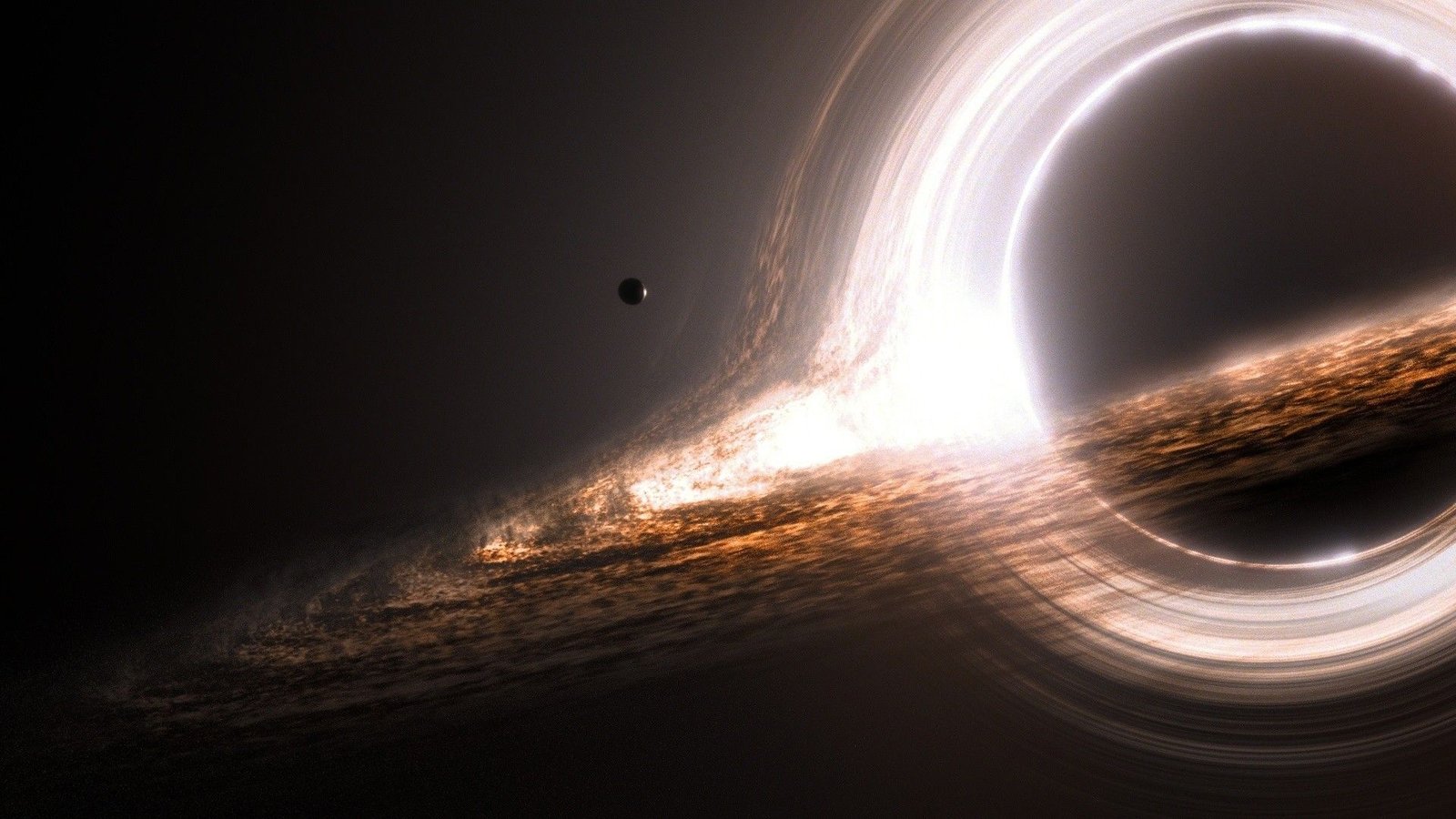
At the very center of the Milky Way, approximately 27,000 light-years from Earth, sits one of the most extreme objects in the known universe. Sagittarius A* — pronounced Sagittarius A-star — is a supermassive black hole containing roughly four million times the mass of our Sun, compressed into a region smaller than our solar system. In May 2022, the Event Horizon Telescope collaboration released the first direct image of Sgr A*, confirming what decades of indirect observation had strongly suggested: our galaxy has a monster at its heart.
But Sagittarius A* is, by the standards of supermassive black holes, strangely quiet. Many galaxies in the universe host active galactic nuclei — supermassive black holes that are actively consuming surrounding material and in doing so, releasing jets of plasma and radiation so powerful they outshine the entire galaxy of stars around them. The Milky Way’s central black hole does almost none of this. It is, for its mass, extraordinarily dim and inactive. Why?
The Mystery of Sgr A*’s Unusual Appetite
Scientists know that Sagittarius A* was not always so quiet. Analysis of light echoes — reflections of ancient X-ray flares bouncing off gas clouds near the galactic center — suggests that just a few million years ago, Sgr A* was between a million and a hundred million times more luminous than it is today. Something dramatic happened in the relatively recent cosmic past to dramatically reduce its feeding rate. Perhaps a supply of gas that was once funneling toward the black hole was disrupted. Perhaps a burst of star formation in the galactic center consumed the material before it could fall in. The transition from active to quiescent, and whether Sgr A* might someday wake up again, remains one of the most actively studied and incompletely understood aspects of our own galaxy’s history and future.
3. The Fermi Bubbles: Two Enormous Structures Nobody Expected
In 2010, astronomers analyzing data from NASA’s Fermi Gamma-ray Space Telescope made a discovery so surprising that some researchers initially suspected a data error. Extending above and below the plane of the Milky Way, reaching roughly 25,000 light-years in each direction from the galactic center, were two enormous lobes of gamma-ray and X-ray emission — structures so large that if they were visible to the naked eye, they would cover a significant portion of the sky. Scientists named them the Fermi Bubbles, and more than fifteen years after their discovery, their origin remains genuinely uncertain.
The bubbles appear to be relatively young in cosmic terms — likely no more than a few million years old. Their edges are surprisingly sharp and well-defined, suggesting they were created by a single energetic event rather than a gradual process. Two main explanations have been proposed, and the debate between them has not been conclusively resolved. The first hypothesis holds that the bubbles were inflated by a past period of intense activity from Sagittarius A* — perhaps the same episode that the light echoes hint at, when the galactic black hole was consuming material at a dramatically higher rate and launching powerful jets of energy into the space above and below the galaxy.
The second hypothesis attributes the Fermi Bubbles to an intense burst of star formation in the galactic center — a period when thousands of massive stars formed rapidly, lived brief, violent lives, and exploded as supernovae in rapid succession, collectively driving an enormous outflow of gas and energy. Both scenarios are physically plausible. Both are consistent with some of the observations and inconsistent with others. The true origin of the Fermi Bubbles, two of the largest structures in the entire Milky Way, remains an open question in galactic astronomy.
4. The Missing Satellite Problem: Where Are All the Dwarf Galaxies?
The Milky Way does not exist in isolation. It is surrounded by a collection of smaller companion galaxies — dwarf galaxies that orbit our own like moons orbiting a planet. The Large and Small Magellanic Clouds, visible as bright patches in the southern hemisphere sky, are the most prominent examples. But according to the standard model of cosmology, the Milky Way should have far more satellite galaxies than astronomers have actually found.
Computer simulations of how galaxies form in a universe dominated by dark matter consistently predict that a galaxy the size of the Milky Way should be surrounded by hundreds or even thousands of small dark matter sub-halos, each hosting a dwarf galaxy. In reality, only a few dozen satellite galaxies have been confirmed around the Milky Way, even after careful surveys using modern instruments have combed the sky for faint, low-surface-brightness objects.
Proposed Solutions That Raise More Questions
Several explanations have been put forward to resolve this discrepancy, which astronomers call the missing satellite problem. One possibility is that most of the predicted sub-halos exist but are essentially empty — dark matter clumps that never accumulated enough ordinary matter to form visible stars, making them effectively invisible to current telescopes. Another possibility is that feedback processes — supernova explosions and radiation pressure from young stars — blew gas out of small dark matter clumps before they could form significant stellar populations, leaving behind dark, starless halos. A third and more radical possibility is that the standard model of dark matter itself is flawed, and that a modified understanding of dark matter’s properties would predict fewer satellite galaxies in the first place. None of these explanations has achieved consensus, and the missing satellite problem remains a live and important tension at the intersection of observational and theoretical cosmology.
5. Hypervelocity Stars: What Is Launching Them Out of the Galaxy?
The Milky Way appears to be ejecting stars. Not slowly, not gently — but at velocities of hundreds of kilometers per second, fast enough to escape the galaxy’s gravitational pull entirely and travel off into the intergalactic void forever. These objects are called hypervelocity stars, and since the first one was discovered in 2005, dozens more have been identified, raising profound questions about what is accelerating them to such extraordinary speeds.
The leading explanation involves the gravitational dynamics of the supermassive black hole at the galactic center. In a scenario first proposed by theorist Jack Hills in 1988, a binary star system — two stars orbiting each other — passes too close to Sagittarius A*. The black hole’s intense gravity disrupts the pair, capturing one star into a tight orbit while violently flinging the other outward at enormous velocity. This Hills mechanism is theoretically well-supported and likely accounts for at least some of the observed hypervelocity stars.
The Stars That Defy Simple Explanation
But not all hypervelocity stars seem to be coming from the galactic center. Some appear to originate from the disk of the galaxy itself, or from the Large Magellanic Cloud, suggesting that other ejection mechanisms are also at work — perhaps the asymmetric explosions of supernovae that kick the surviving companion star of a binary system outward at high velocity. The diversity of apparent origins, velocities, and stellar types among known hypervelocity stars suggests that multiple processes are contributing to the population, and fully mapping those processes requires far more observational data than currently exists. ESA’s Gaia mission, which has been measuring the positions and velocities of over a billion stars with extraordinary precision, is providing a wealth of new data that may eventually resolve the mystery — or deepen it.
6. The Galactic Bar and the Milky Way’s True Shape
For most of human history, astronomers believed the Milky Way was a relatively standard spiral galaxy — a flat disk of stars with elegant, sweeping arms wrapping around a central hub. More recent observations have revealed something considerably more complicated and, in places, rather strange. The Milky Way is now understood to be a barred spiral galaxy, meaning that instead of a simple spherical central bulge, it has an elongated bar of stars running through its center, roughly 27,000 light-years long, from which the spiral arms emerge.
But the details of the Milky Way’s structure become increasingly puzzling the more carefully they are examined. The galactic disk is not flat. It is warped — bent significantly upward on one side and downward on the other, in a shape astronomers compare to a wide-brimmed hat seen from the side. This warp has been known for decades, but its cause is still debated. A close passage by one of the Milky Way’s satellite galaxies, or the gravitational influence of a dark matter halo that is itself asymmetric, are among the proposed explanations. Neither has been definitively confirmed.
Adding to the complexity, surveys using infrared telescopes capable of seeing through the dense dust clouds near the galactic center have revealed a second, smaller bar-like structure and hinted at the existence of a ring of stars encircling the galactic center. Whether these features are genuinely distinct structural components or artifacts of complex stellar dynamics remains unclear. The true three-dimensional shape of the Milky Way — the galaxy we call home — is still being worked out, one painstaking observation at a time.
Frequently Asked Questions (FAQ)
Q: What are the biggest unsolved mysteries of the Milky Way galaxy? The most significant unresolved mysteries include the true nature of dark matter and its role in the galaxy’s structure, the cause and origin of the Fermi Bubbles, the reasons behind Sagittarius A*’s unusual inactivity compared to black holes of similar mass in other galaxies, the missing satellite galaxy problem, and the mechanisms driving hypervelocity stars out of the galaxy at extraordinary speeds.
Q: What is dark matter, and why does the Milky Way need it? Dark matter is an invisible form of matter that does not emit, absorb, or reflect light but exerts gravitational influence on ordinary matter. In the Milky Way, its presence is inferred from the observation that stars at the galaxy’s outer edges orbit far faster than they should based on the visible mass alone. Dark matter is believed to form a vast halo around the galaxy, providing the additional gravitational pull that explains these orbital velocities. Despite decades of searching, its fundamental nature remains unknown.
Q: What are the Fermi Bubbles, and when were they discovered? The Fermi Bubbles are two enormous lobes of gamma-ray and X-ray emission extending roughly 25,000 light-years above and below the plane of the Milky Way from the galactic center. They were discovered in 2010 using data from NASA’s Fermi Gamma-ray Space Telescope. Their origin is still debated, with scientists divided between a past period of intense activity from the galactic black hole and an ancient burst of rapid star formation near the galaxy’s center.
Q: How do scientists study the Milky Way if we are inside it? Scientists use a combination of radio telescopes, infrared observatories, gamma-ray and X-ray satellites, and optical telescopes to study the galaxy from within. Radio waves can penetrate the dense dust clouds that obscure the galactic center from optical telescopes. Missions like ESA’s Gaia satellite, which is mapping the positions and motions of over a billion stars, are providing an unprecedented three-dimensional picture of the galaxy’s structure. Studying other galaxies similar to the Milky Way also provides insights by allowing us to see from the outside what we cannot easily see from within.
Q: Could Sagittarius A, the Milky Way’s black hole, become active again?* Possibly. Evidence from light echoes suggests Sagittarius A* was far more active just a few million years ago. If a large supply of gas or a disrupted star system were to provide it with fresh material, it could potentially become more active. In approximately four billion years, the Milky Way will merge with the Andromeda galaxy, an event that will almost certainly trigger a new period of intense feeding for Sagittarius A* as vast quantities of gas and stars are funneled toward the galactic center during the collision.
Conclusion: The Galaxy Above Us Is the Greatest Unsolved Mystery We Have
On a clear, moonless night, far from the glow of city lights, you can step outside and look up to see a faint, hazy band of light stretching from horizon to horizon. That smear of pale luminescence is the collective light of hundreds of billions of stars — the disk of the Milky Way seen from inside, edge-on, the galaxy we have lived within for the entire history of our species, without fully understanding what it is.
The mysteries of the Milky Way are not footnotes in the story of astronomy. They are among the central questions of modern science. What is dark matter, and why does it make up most of our galaxy’s mass without ever interacting with our instruments? What unleashed the Fermi Bubbles? Why is our central black hole so quiet? What launched those stars into the void? Why does the galaxy’s shape defy our best models of how galaxies should be built?
Each of these questions is a door. Behind each door is a deeper understanding of how gravity, matter, energy, and time weave together to produce the structured, luminous, mysteriously beautiful cosmos we inhabit. We do not have the keys to all of those doors yet. But the instruments we are building, the missions we are launching, and the minds we are dedicating to these problems give every reason to believe that the answers are within reach.
The Milky Way has been above us for all of human history. It will take all of our curiosity, creativity, and courage to finally understand it.

Leave a Reply