
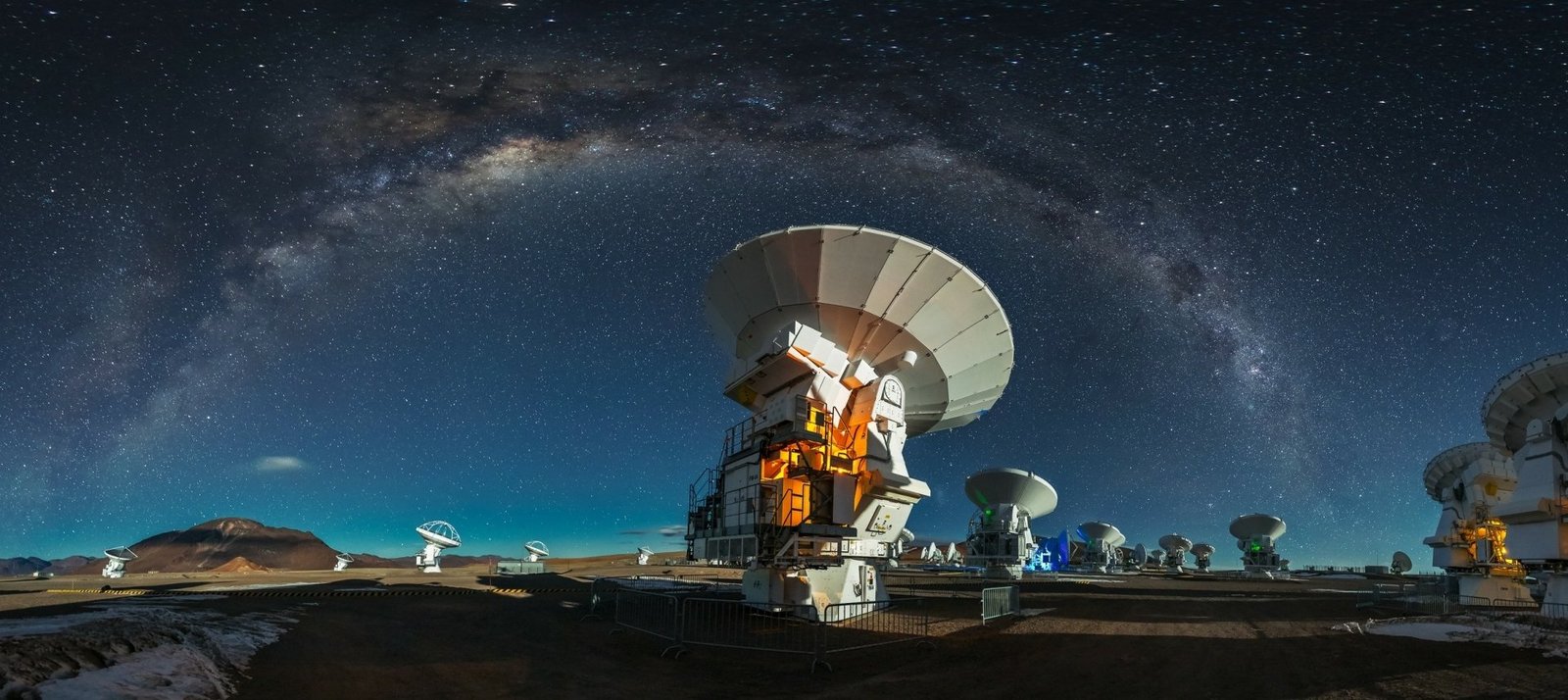
Introduction: Humanity’s Greatest Eyes on the Universe
There is something deeply human about looking up at the night sky and asking what is out there. For thousands of years, that question was answered only by what our naked eyes could see — a few thousand stars, the pale smear of the Milky Way, and the occasional wandering planet. Then, in the early 17th century, Galileo Galilei pointed a simple tube of glass lenses toward the heavens and changed everything. He saw craters on the Moon, moons orbiting Jupiter, and phases of Venus. The universe, it turned out, was far stranger and far richer than anyone had imagined.
Four centuries later, we are still asking the same question — but the instruments we use to answer it have become almost incomprehensibly powerful. Today’s most powerful telescopes do not merely collect light from nearby stars. They capture the faint glow of galaxies born just a few hundred million years after the Big Bang. They detect ripples in spacetime caused by colliding black holes a billion light-years away. They analyze the chemical composition of atmospheres on worlds orbiting other stars, searching for the molecular fingerprints of life itself.
The telescopes exploring the universe right now represent some of the most complex and ambitious engineering achievements in human history. Each one has been designed to answer questions that previous generations could not even properly formulate. And each one, without fail, has revealed a universe stranger, older, and more breathtaking than the models built to predict what it would find.
Here are the five most powerful telescopes currently exploring the universe — and the extraordinary discoveries they are making.
1. The James Webb Space Telescope: Humanity’s Deepest Eye
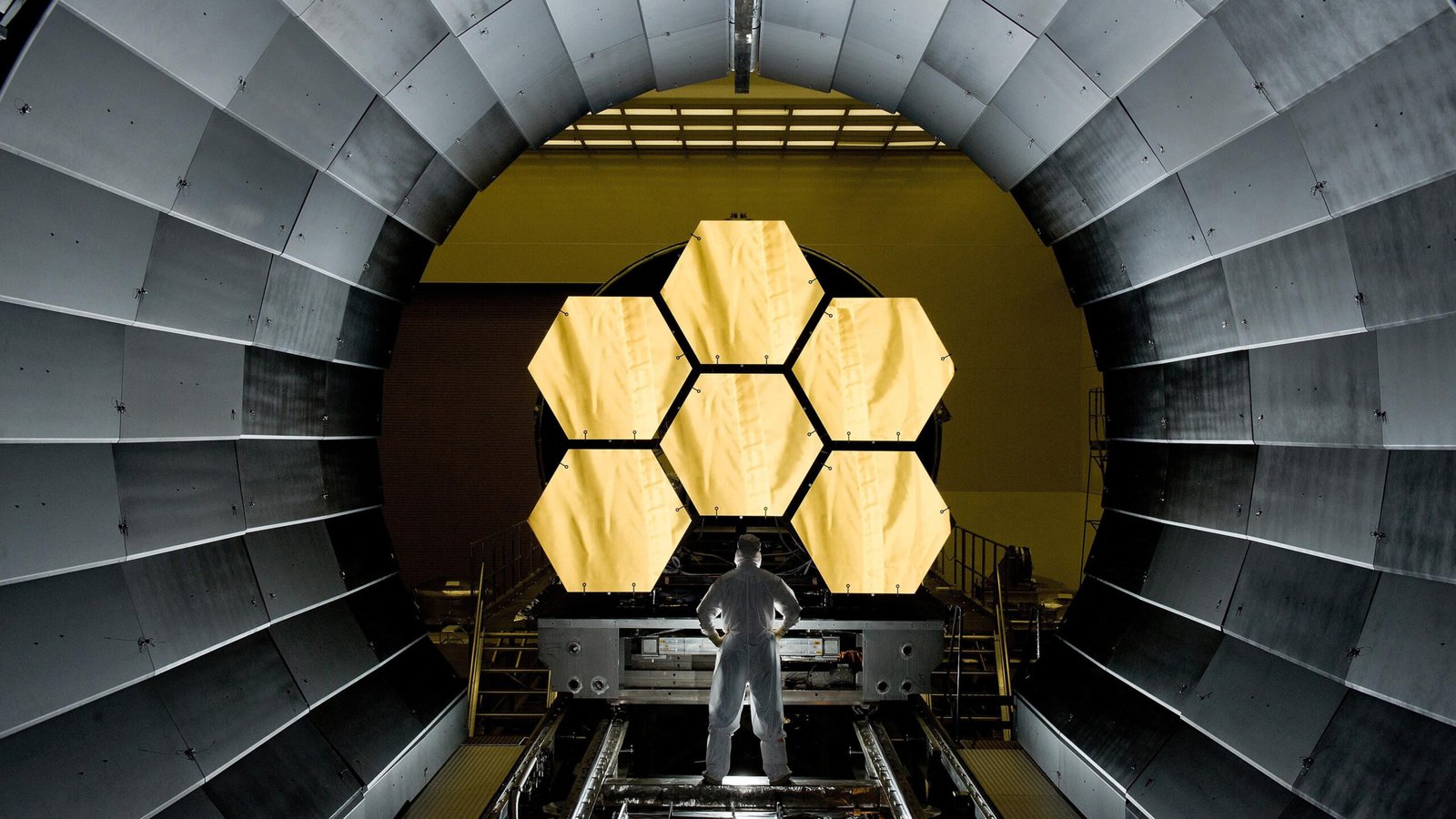
If there is a single instrument that defines this golden age of astronomy, it is the James Webb Space Telescope. Launched on December 25, 2021, after more than two decades of development and a price tag exceeding 10 billion dollars, Webb is the largest and most technically sophisticated space observatory ever placed in orbit. It sits nearly 1.5 million kilometers from Earth at a gravitationally stable point called L2, where it is shielded from the Sun, Earth, and Moon by a tennis-court-sized sunshield made of five layers of a material thinner than a human hair.
Webb observes the universe primarily in infrared light — wavelengths of radiation invisible to the human eye but essential for seeing through clouds of cosmic dust and detecting the light of the most distant objects in the universe. Because the universe is expanding, light from the earliest galaxies has been stretched by that expansion into infrared wavelengths by the time it reaches us. Webb is specifically designed to capture that stretched, ancient light, making it capable of seeing further back in time than any telescope before it.
What Webb Has Already Revealed
The discoveries have come rapidly and dramatically. Webb has imaged galaxies that formed just 300 to 400 million years after the Big Bang — objects whose light has been traveling toward us for over 13 billion years. It has captured the atmospheric chemistry of exoplanets with unprecedented detail, detecting carbon dioxide, water vapor, sulfur dioxide, and complex organic molecules in worlds orbiting other stars. It has resolved individual stars inside galaxies that were previously seen only as blurry smudges, and it has photographed the dying breath of stars in nebulae of extraordinary color and complexity.
One of Webb’s most scientifically significant early findings was the discovery that the earliest galaxies in the universe were larger, more massive, and more structured than theoretical models predicted. This has sent cosmologists back to their equations, revising models of how galaxies form and evolve. Webb is not just confirming what we expected to find — it is consistently surprising us, which is exactly what the best science does.
2. The Hubble Space Telescope: The Pioneer That Refuses to Retire
Before Webb, there was Hubble — and even now, with its younger and more powerful successor fully operational, the Hubble Space Telescope remains one of the most scientifically productive instruments ever built. Launched in April 1990 aboard the Space Shuttle Discovery, Hubble initially suffered from an embarrassing flaw: its primary mirror had been ground to the wrong shape, producing blurry images. A daring shuttle servicing mission in 1993 installed corrective optics, and Hubble was transformed overnight from a public embarrassment into a scientific legend.
Operating primarily in visible and ultraviolet light, Hubble has contributed to over 1.5 million scientific observations and has been cited in more than 20,000 peer-reviewed papers. It helped determine the age of the universe with unprecedented precision — approximately 13.8 billion years — by measuring the distances to Cepheid variable stars in distant galaxies. It provided some of the first strong observational evidence that the expansion of the universe is accelerating, a discovery so unexpected it earned its discoverers the Nobel Prize in Physics in 2011 and introduced the concept of dark energy into mainstream cosmology.
Hubble’s Legacy and Future
Hubble’s famous deep field images — long exposures of tiny, seemingly empty patches of sky — revealed thousands of galaxies in regions that appeared blank to previous instruments, fundamentally altering our understanding of how densely populated the universe is with structures. Today, Hubble and Webb are frequently used together, with their complementary wavelength ranges providing a more complete picture of cosmic objects than either could achieve alone. NASA has indicated that Hubble could continue operating into the early 2030s, making it one of the longest-serving scientific instruments in history.
3. The Chandra X-Ray Observatory: Seeing the Universe’s Most Violent Secrets
The universe contains phenomena so energetic and violent that they emit radiation far beyond the range of ordinary visible light. Black holes consuming stellar material, neutron stars colliding at a fraction of the speed of light, supernova remnants expanding at thousands of kilometers per second — these events pour enormous quantities of X-ray radiation into space. To study them, you need a telescope designed specifically for that purpose. NASA’s Chandra X-Ray Observatory, launched in 1999, is the most powerful X-ray telescope ever built and has been transforming our understanding of the universe’s most extreme environments for over two decades.
Chandra orbits Earth in a highly elliptical orbit that takes it nearly a third of the way to the Moon, placing it above the X-ray-absorbing atmosphere that makes ground-based X-ray astronomy impossible. Its mirrors, polished to a smoothness measured in atoms, graze incoming X-ray photons at shallow angles and focus them onto detectors of extraordinary sensitivity. The images Chandra produces reveal a universe of searing plasma, colliding galaxy clusters, and supermassive black holes actively feeding on surrounding material in a process that releases more energy than entire galaxies of normal stars.
Chandra’s Most Important Discoveries
Among Chandra’s landmark contributions is the confirmation of dark matter through observations of the Bullet Cluster — two galaxy clusters that passed through each other, with their hot gas slowed by electromagnetic interactions while the dark matter passed straight through, creating a visible separation between the ordinary matter and the invisible dark component. Chandra has also mapped the environment around the supermassive black hole at the center of the Milky Way, tracked the shock waves expanding from ancient supernovae, and detected X-ray echoes from black holes that allow astronomers to map the geometry of space in their immediate vicinity.
4. The Very Large Array: Earth’s Premier Radio Observatory
Not all light is visible. Radio waves — at the opposite end of the electromagnetic spectrum from X-rays — carry their own rich cargo of cosmic information, and some of the most important astronomical discoveries of the past century have been made by instruments designed to detect them. The Karl G. Jansky Very Large Array, located on the Plains of San Agustin in New Mexico and operated by the National Radio Astronomy Observatory, is the most versatile and scientifically productive radio telescope facility on Earth.
The VLA consists of 27 individual radio dish antennas, each 25 meters in diameter, arranged along three arms of a Y-shaped railroad track. The dishes can be repositioned along the tracks to create different configurations, ranging from a compact cluster covering a few hundred meters to a sprawling array stretching 36 kilometers across. By combining signals from all 27 dishes through a technique called interferometry, the VLA achieves a resolving power equivalent to a single dish 36 kilometers wide — far greater than any individual instrument could achieve.
What the VLA Has Taught Us About the Universe
The VLA was instrumental in producing some of the first detailed images of the jets of material being launched from the cores of active galaxies — enormous streams of plasma traveling at close to the speed of light, extending thousands of light-years into intergalactic space. It has mapped hydrogen gas distributions in nearby galaxies, traced the radio afterglows of gamma-ray bursts, and observed the radio signatures of pulsars and magnetars. In 2012, after a major technical upgrade, the VLA’s sensitivity was increased by a factor of ten, opening new scientific territory. It continues to be one of the most heavily subscribed astronomical facilities in the world, with far more observing requests than available time.
5. The Event Horizon Telescope: The Network That Photographed a Black Hole
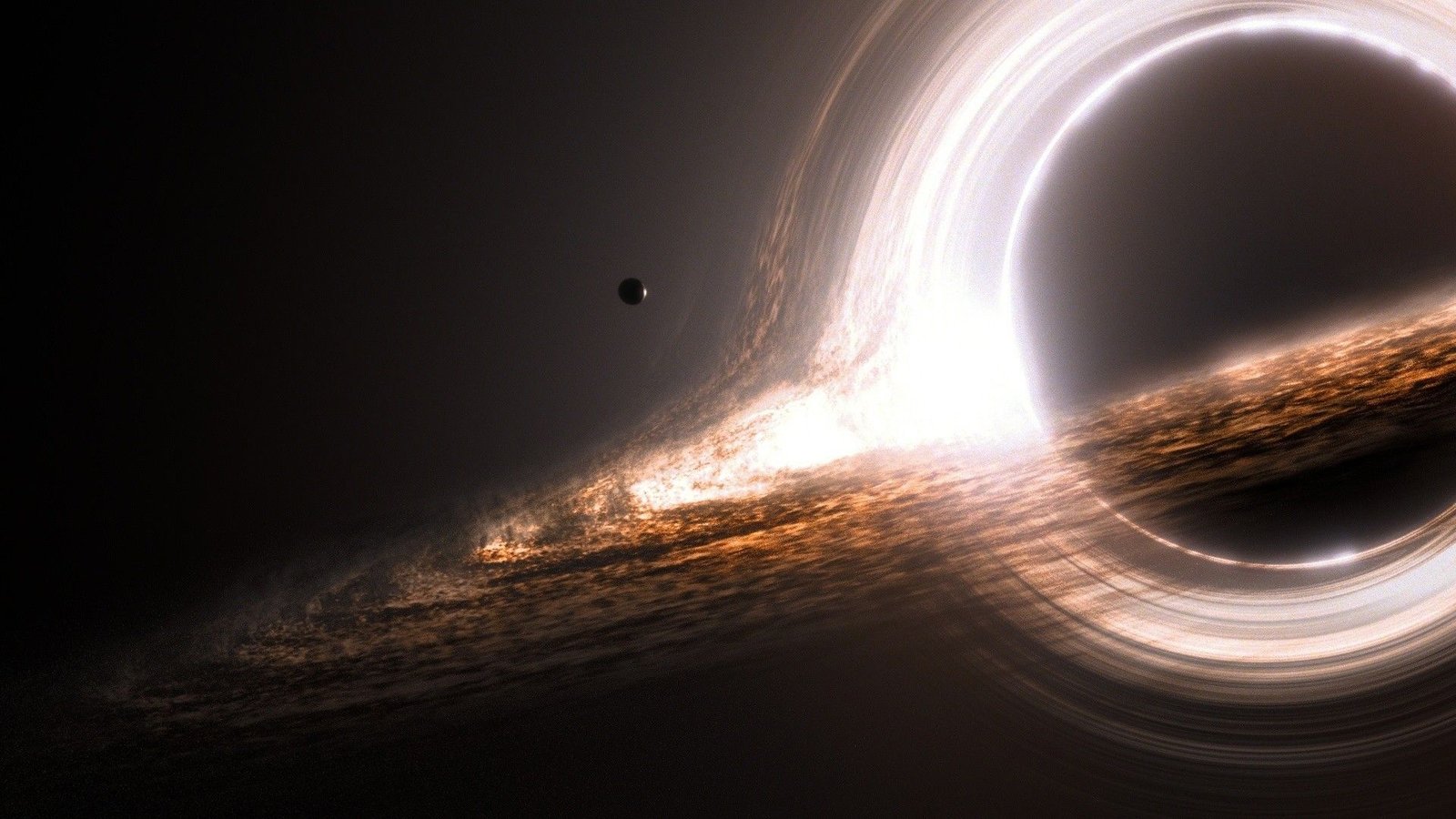
The Event Horizon Telescope is unlike any other instrument on this list. It is not a single physical telescope in a single location. It is a planet-scale network of radio observatories spread across six continents, synchronized so precisely using atomic clocks that they function together as a single dish effectively the size of Earth. That extraordinary resolving power was built for one purpose: to image the immediate environment of a supermassive black hole — the boundary region called the event horizon beyond which nothing, not even light, can escape.
In April 2019, the EHT collaboration released an image that stopped the world. The glowing, asymmetric ring of hot plasma surrounding the shadow of the supermassive black hole M87* — a monster 6.5 billion times the mass of our Sun, located 55 million light-years away — was the first direct visual confirmation of something that had been mathematically predicted for over a century. Albert Einstein’s general theory of relativity described black holes in 1915. A century later, humanity finally looked at one and saw exactly what Einstein’s equations predicted.
Sagittarius A*: Photographing Our Own Galaxy’s Black Hole
In May 2022, the EHT collaboration delivered a second landmark image: the first photograph of Sagittarius A*, the supermassive black hole residing at the center of our own Milky Way galaxy, approximately 27,000 light-years from Earth. Despite being far closer than M87*, Sagittarius A* proved more technically challenging to photograph because it is less massive and its surrounding material moves faster, changing the appearance of the emission region faster than the observation window allows. The resulting image, blurred and smeared compared to M87* but unmistakably real, confirmed that our own galaxy harbors a sleeping giant at its core — one containing about four million solar masses packed into a region smaller than our solar system.
Frequently Asked Questions (FAQ)
Q: What is the most powerful telescope in the world right now? The James Webb Space Telescope is currently the most powerful space telescope ever built, capable of observing the universe in infrared light with a sensitivity and resolution that far surpasses any previous instrument. For ground-based observations in specific wavelength ranges, facilities like the VLA and the Event Horizon Telescope network offer capabilities that Webb cannot match.
Q: How does the James Webb Space Telescope differ from Hubble? Webb observes primarily in infrared light, while Hubble works mainly in visible and ultraviolet wavelengths. Webb’s mirror is approximately 6.5 meters in diameter compared to Hubble’s 2.4 meters, giving it vastly greater light-gathering power. Webb is also positioned much further from Earth than Hubble, at a point 1.5 million kilometers away, rather than in low Earth orbit.
Q: Can these powerful telescopes detect signs of alien life? The James Webb Space Telescope is actively studying the atmospheres of exoplanets for biosignatures — chemical signatures like oxygen, methane, and water vapor that could indicate biological activity. No confirmed biosignature has been detected yet, but Webb’s capabilities make it theoretically possible to identify promising candidates around nearby star systems.
Q: Why do some telescopes need to be placed in space? Earth’s atmosphere absorbs many wavelengths of radiation — including most infrared, X-ray, and gamma-ray light — before it reaches the ground. Space-based telescopes like Webb, Hubble, and Chandra are placed above the atmosphere to access these wavelengths and also to avoid the blurring effect that atmospheric turbulence causes even for ground-based optical telescopes.
Q: What will come after the James Webb Space Telescope? NASA is developing the Nancy Grace Roman Space Telescope, expected to launch in the late 2020s, which will survey the sky in near-infrared light with a field of view 100 times larger than Webb’s, enabling large-scale studies of dark energy and exoplanet populations. Further in the future, concepts for extremely large space observatories — some with mirrors spanning dozens of meters — are in early planning stages.
Conclusion: Every Lens Is a Step Closer to Understanding Everything
There is a profound humility that comes with studying the universe at this scale. The telescopes described in this article are among the greatest achievements of human ingenuity — machines of extraordinary precision built to answer questions that strike at the very core of our existence. Where did we come from? How did the universe begin? Are we alone? Is the cosmos comprehensible to minds that evolved on a small planet around an ordinary star?
Each time we build a more powerful instrument and point it at the sky, the universe responds not with simple answers but with deeper mysteries. Webb finds galaxies that should not exist in the early universe. Chandra reveals dark matter through its gravitational shadow. The Event Horizon Telescope shows us a black hole and confirms that Einstein was right — while simultaneously opening new questions about what happens at the boundary of spacetime.
The five most powerful telescopes exploring the universe today are not endpoints. They are waypoints on a journey that has no final destination, only an ever-expanding horizon of wonder. Every photon they capture has been traveling through the cosmos for millions or billions of years, carrying information about places and events so remote they beggar imagination, arriving at last at a thin piece of mirror on a mountain or a satellite drifting in the cold silence of space — and then, somehow, becoming knowledge in a human mind.
That is not just science. That is one of the most extraordinary things our species has ever done.

Leave a Reply