

Introduction: The Day the Sky Became a Threat
On the morning of February 15, 2013, residents of Chelyabinsk, Russia, looked up to see a streak of brilliant white light blazing across the sky. It was beautiful for exactly one second. Then the object — a meteor roughly 20 meters wide and weighing nearly half a million tonnes — exploded in the atmosphere with a force thirty times greater than the atomic bomb dropped on Hiroshima. The shockwave shattered windows across six cities, damaged over 7,000 buildings, and injured more than 1,500 people. It remains the largest natural space object to enter Earth’s atmosphere in over a century.
Here is the part that should make you pause: nobody saw it coming.
The Chelyabinsk meteor arrived completely undetected, entering Earth’s atmosphere from the direction of the Sun, where ground-based telescopes cannot look. It was a vivid and humbling reminder that the solar system is not a static, peaceful place. It is a dynamic, occasionally violent environment full of rocky debris left over from the formation of the planets, and some of that debris is on a collision course with Earth.
The asteroid threat to Earth is not science fiction. It is planetary science. And NASA, along with an international network of observatories, space agencies, and private organizations, is working with growing urgency and sophistication to make sure that humanity is never caught off guard again. The stakes could not be higher. The story of how we are rising to meet this challenge is one of the most important and underreported narratives in modern science.
1. Understanding the Asteroid Threat: What Is Actually Out There
Before examining how NASA protects our planet, it helps to understand exactly what kind of threat we are dealing with. The solar system contains millions of rocky and metallic objects called asteroids, most of them orbiting peacefully in the Main Belt between Mars and Jupiter. But gravitational interactions with Jupiter and other planets occasionally nudge asteroids out of the Main Belt and onto paths that cross Earth’s orbit. These are called Near-Earth Objects, or NEOs, and they come in a range of sizes, compositions, and orbital characteristics.
As of early 2026, NASA has catalogued over 35,000 Near-Earth Objects, and the number grows every month as survey telescopes scan the sky with increasing sensitivity. Of those, more than 2,300 have been classified as Potentially Hazardous Asteroids — objects large enough to cause significant regional or global damage and whose orbits bring them within 7.5 million kilometers of Earth’s orbital path. That sounds like a comfortable margin, but in astronomical terms, it is close enough to demand serious attention.
Size, Impact Energy, and What It Means for Earth
The consequences of an asteroid impact scale dramatically with size. An object 25 to 50 meters across, like the Chelyabinsk meteor, can devastate a city if it reaches the surface intact. An asteroid 140 meters wide — roughly the threshold NASA uses to define objects requiring urgent tracking — carries enough energy to destroy an area the size of a large country. An impactor one kilometer across would trigger global climate disruption, crop failures, and what scientists describe as an impact winter — a scenario comparable in scale to the catastrophe that wiped out the non-avian dinosaurs 66 million years ago, caused by an object estimated at 10 to 15 kilometers in diameter.
The good news is that the largest asteroids — those kilometer-scale objects that could threaten civilization — are now well catalogued, and none of them are on a collision course with Earth for the foreseeable future. The ongoing challenge is finding and tracking the hundreds of thousands of smaller objects that remain undetected, and that could still cause regional or even continental-scale devastation.
2. NASA’s Planetary Defense Coordination Office: The Command Center for Earth’s Safety
In 2016, NASA formalized its approach to the asteroid threat by establishing the Planetary Defense Coordination Office, or PDCO. Based at NASA headquarters in Washington, D.C., the PDCO serves as the nerve center for all U.S. government efforts related to detecting, tracking, and responding to potential asteroid and comet threats. It coordinates with the U.S. Department of Defense, the Federal Emergency Management Agency, international space agencies, and the United Nations to ensure that planetary defense is a coherent, global effort rather than a patchwork of disconnected programs.
The PDCO’s primary responsibilities include funding and overseeing survey programs that search for Near-Earth Objects, maintaining the catalog of known asteroids and their orbital parameters, assessing the risk posed by newly discovered objects, and developing and testing technologies that could be used to deflect a threatening asteroid if one were discovered on a collision course. It also manages communication — making sure that if a credible threat is identified, the right people are informed quickly and the public receives accurate information rather than panic-inducing speculation.
The Torino Scale: Rating Asteroid Danger
To communicate the level of risk posed by a specific asteroid, planetary scientists use the Torino Impact Hazard Scale — a ten-point system that ranges from zero, meaning no hazard, to ten, meaning a certain collision capable of causing global catastrophe. The scale takes into account both the probability of impact and the estimated energy of the collision. To date, no known asteroid has ever risen above a Torino Scale value of 4, and most newly discovered objects quickly drop to zero as additional observations refine their orbital calculations. The scale is a critical tool for helping scientists, policymakers, and the public distinguish between objects requiring urgent attention and the far larger number that pose no meaningful threat.
3. Watching the Sky: NASA’s Network of Planetary Defense Telescopes
The foundation of any planetary defense strategy is detection. You cannot deflect an asteroid you do not know about. NASA funds several dedicated survey programs tasked with systematically scanning the sky for Near-Earth Objects, cataloguing their positions, and calculating their orbits with enough precision to predict whether any of them will intersect with Earth’s path in the coming decades or centuries.
The Catalina Sky Survey, operated by the University of Arizona with NASA funding, is currently one of the most productive NEO discovery programs in the world, routinely finding dozens of new objects every month. The Pan-STARRS telescopes in Hawaii conduct wide-field sky surveys that have contributed thousands of NEO discoveries to the global catalog. The ATLAS system, also based in Hawaii with additional stations in Chile and South Africa, provides rapid follow-up observations and is particularly valuable for detecting objects that approach Earth on short notice — sometimes just days or hours before a potential impact.
The NEO Surveyor: A Space-Based Guardian
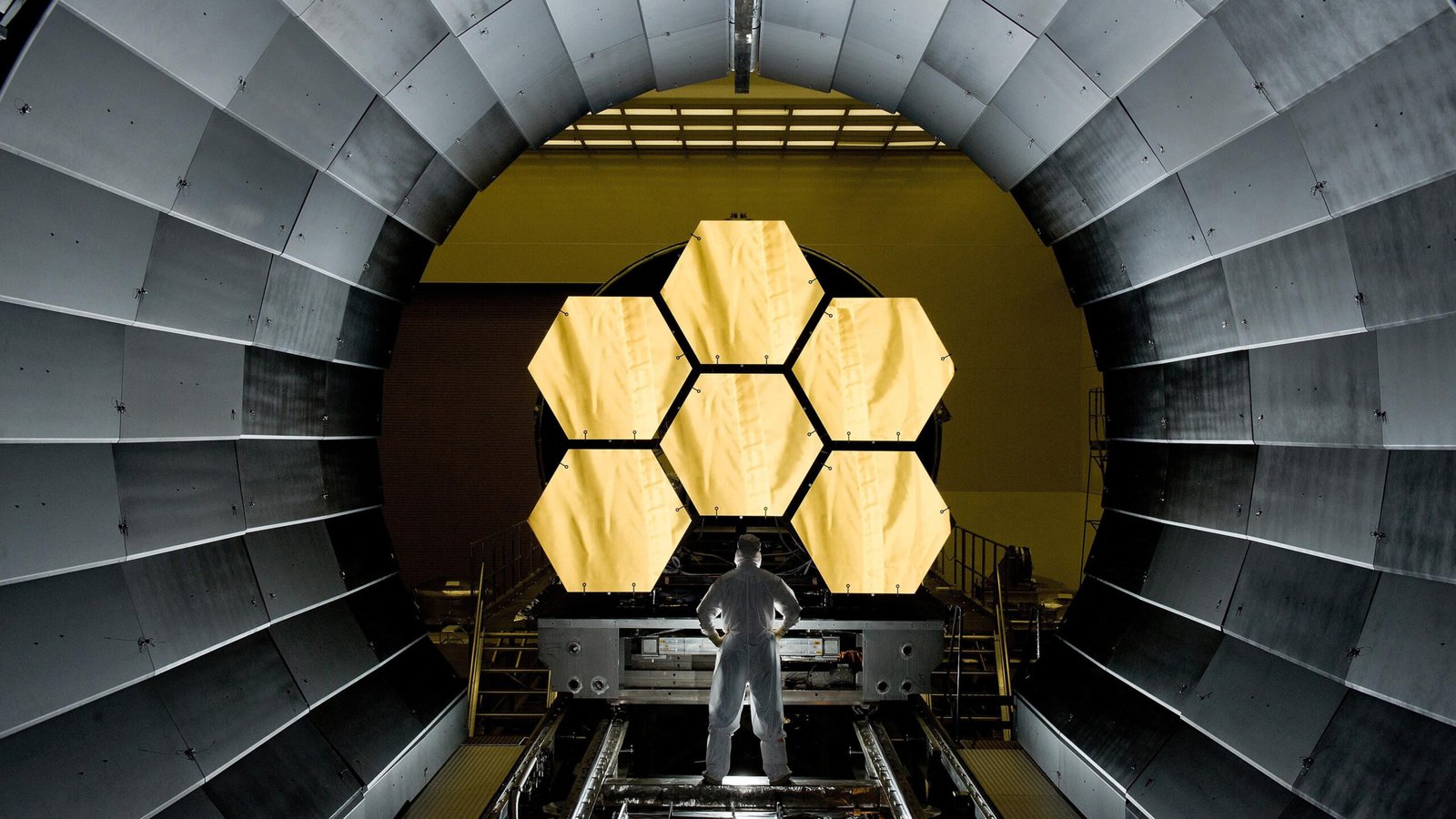
Ground-based telescopes, however excellent, have a fundamental limitation: they cannot see objects approaching from the direction of the Sun. This is exactly the blind spot that allowed the Chelyabinsk meteor to arrive without warning. To address this vulnerability, NASA is developing the Near-Earth Object Surveyor mission — a space-based infrared telescope that will orbit the Sun between Earth and Venus, able to scan regions of the sky invisible to ground-based instruments.
NEO Surveyor is designed to detect 90 percent of Near-Earth Objects larger than 140 meters within a decade of its launch, a benchmark set by the U.S. Congress in 2005. Observing in infrared allows it to detect asteroids that appear dark in visible light — objects that ground-based telescopes in optical wavelengths might miss entirely. When fully operational, NEO Surveyor will dramatically improve the completeness of the global asteroid catalog and provide the long warning times — ideally years to decades — that any deflection mission would require.
4. The DART Mission: Humanity’s First Planetary Defense Test
Detection is only half the challenge. Once a threatening asteroid is identified, humanity needs the capability to do something about it. For most of the history of planetary science, asteroid deflection was a theoretical exercise — debated in academic papers but never tested in practice. In September 2022, that changed forever.
NASA’s Double Asteroid Redirection Test, known as DART, was the world’s first full-scale planetary defense demonstration mission. Its target was Dimorphos — a small moonlet approximately 160 meters in diameter orbiting a larger asteroid called Didymos, located about 11 million kilometers from Earth at the time of the experiment. DART was a deliberately simple concept: accelerate a spacecraft to high velocity and crash it directly into the asteroid, transferring momentum in a way that would alter the object’s orbital period around its parent body.
The Result That Changed History
On September 26, 2022, the DART spacecraft — roughly the size and mass of a golf cart — impacted Dimorphos at approximately 6.1 kilometers per second. The collision was observed in real time by a small Italian-built cubesat called LICIACube, which had separated from DART weeks earlier to photograph the impact. Ground-based telescopes around the world watched the brightness of the Didymos system change as an enormous plume of ejecta — pulverized rock and dust — billowed out from the impact site.
The results exceeded expectations dramatically. Scientists had hoped to shorten Dimorphos’s orbital period around Didymos by at least 73 seconds — the minimum change needed to declare the mission a success. The actual change was 33 minutes. The momentum transferred by the ejecta plume, which acted like a rocket exhaust pushing back against the asteroid, amplified the effect of the impact far beyond what the spacecraft’s mass alone could achieve. Planetary defense scientists celebrated what they described as a profound proof of concept: humanity now knows it can alter the course of an asteroid. The capability is real, and it works.
5. Planetary Defense Strategies: More Than Just Crashing Into Rocks
The kinetic impactor technique demonstrated by DART is the most immediately practical method of asteroid deflection for objects discovered with adequate warning time — ideally years to decades in advance. But planetary defense researchers have explored a range of other strategies, each with different advantages depending on the size of the threat, the time available, and the composition of the target asteroid.
The Gravity Tractor and Ion Beam Shepherd
One of the more elegant proposed deflection methods is the gravity tractor — a concept in which a spacecraft flies alongside a threatening asteroid for an extended period without making contact. The spacecraft’s own gravitational pull, while tiny, would very slowly tug the asteroid onto a slightly different trajectory over months or years. The advantage of this approach is that it does not require precise knowledge of the asteroid’s internal structure and avoids the risk of breaking a loosely aggregated rubble pile asteroid into multiple pieces, which could create a different kind of problem. A related concept, the ion beam shepherd, uses a spacecraft’s ion thruster exhaust directed at the asteroid’s surface to gently push it off course.
Nuclear Deflection: The Last Resort
For objects discovered on short notice or those too large for kinetic impactors to move efficiently, nuclear deflection remains the most powerful option in the theoretical planetary defense toolkit. A nuclear device detonated near the surface of an asteroid — not on it, to avoid fragmentation — would vaporize surface material, creating a thrust that could push the object onto a different path. Despite the uncomfortable associations the word nuclear carries, most planetary defense experts regard this option as a legitimate and potentially necessary tool for extreme scenarios. Several international bodies are working on protocols that could authorize such a response if the situation ever demanded it.
6. International Cooperation: Protecting Earth Is Everyone’s Job
The asteroid threat to Earth does not respect national borders, and neither does the response to it. A major impact event anywhere on the planet would have global consequences — through direct destruction, tsunami generation if it struck an ocean, and the atmospheric and climatic effects that could follow a large impact anywhere on Earth’s surface. This reality has driven the development of international frameworks for planetary defense cooperation.
The International Asteroid Warning Network, or IAWN, connects observatories, space agencies, and research institutions from dozens of countries in a shared early warning system. When a new potentially hazardous object is discovered, IAWN members share data, coordinate follow-up observations, and collaborate on orbit determination to rapidly assess the level of risk. The Space Mission Planning Advisory Group, or SMPAG, provides a forum for space agencies to plan potential deflection missions and agree on technical standards and decision-making processes.
The European Space Agency is an active partner in this global effort. ESA’s Hera mission, launched in October 2024 as a follow-up to the DART experiment, is currently traveling to the Didymos system to conduct a detailed survey of the impact crater DART left on Dimorphos and to precisely measure the changes in the asteroid’s mass, structure, and orbit. The data Hera returns will be essential for refining the models scientists use to predict how future deflection missions would perform.
Frequently Asked Questions (FAQ)
Q: Is there any asteroid currently on a collision course with Earth? As of early 2026, no known asteroid poses a confirmed collision risk to Earth in the foreseeable future. NASA’s Center for Near-Earth Object Studies continuously monitors all catalogued objects and maintains a public risk table. The asteroid Apophis, once considered a concern for a 2029 close approach, has been ruled out as an impact risk for at least the next century based on refined orbital calculations.
Q: How much warning would we have if an asteroid were heading toward Earth? Warning time varies enormously depending on the size of the object and when it is discovered. Large asteroids — those over one kilometer — are now well catalogued, and any threat from them would likely be known decades in advance. Smaller objects, particularly those approaching from the Sun’s direction, could be discovered with very little warning, from years to days. This is precisely why NASA is developing the NEO Surveyor space telescope to eliminate the blind spot caused by solar glare.
Q: Could nuclear weapons be used to stop an asteroid? Yes, nuclear deflection is considered a legitimate planetary defense option for large or late-discovered threats. The approach would involve detonating a device near the asteroid’s surface to vaporize material and generate thrust, pushing the asteroid onto a different course without fragmenting it. International discussions about the legal and procedural frameworks for authorizing such a response are ongoing among space agencies and UN committees.
Q: What was the DART mission, and was it successful? DART, or the Double Asteroid Redirection Test, was NASA’s first full-scale planetary defense experiment, conducted in September 2022. The spacecraft successfully impacted the asteroid Dimorphos and changed its orbital period around its parent asteroid Didymos by 33 minutes — far exceeding the minimum success threshold of 73 seconds and proving that kinetic impact deflection is a viable and effective planetary defense strategy.
Q: How many asteroids are currently being tracked by NASA? As of early 2026, NASA has catalogued over 35,000 Near-Earth Objects, with more than 2,300 classified as Potentially Hazardous Asteroids based on their size and orbital proximity to Earth. New objects are discovered every month as survey programs continue scanning the sky. Scientists estimate that hundreds of thousands of smaller objects remain undetected, which is why missions like the NEO Surveyor are considered critical priorities for planetary defense.
Conclusion: The Universe Is Indifferent — But We Are Not
Sixty-six million years ago, a rock roughly 12 kilometers wide crossed Earth’s path at the wrong moment and ended the reign of the dinosaurs. The impact was not malicious. The universe does not have intentions. Rocks move through space according to the laws of gravity, and sometimes those paths intersect with planets. It happened before. It will happen again.
The difference — the only difference — is that for the first time in the 4.5-billion-year history of this planet, one of its species is aware of the threat and is actively working to prevent it. Humanity has built telescopes to watch the sky, developed spacecraft to track the rocks moving through it, and proved that we can change the course of an asteroid before it reaches us. The DART mission was not just an engineering success. It was a declaration: we are paying attention, and we are prepared to act.
The asteroid threat to Earth is real. So is our growing ability to meet it. The work being done by NASA, ESA, and the global planetary defense community represents one of the most important and underappreciated scientific endeavors of our time — a quiet, determined effort to ensure that the story of intelligent life on this planet does not end the way the dinosaurs’ did.
The universe may be indifferent to our survival. But we are not. And that, in the end, makes all the difference.

Leave a Reply