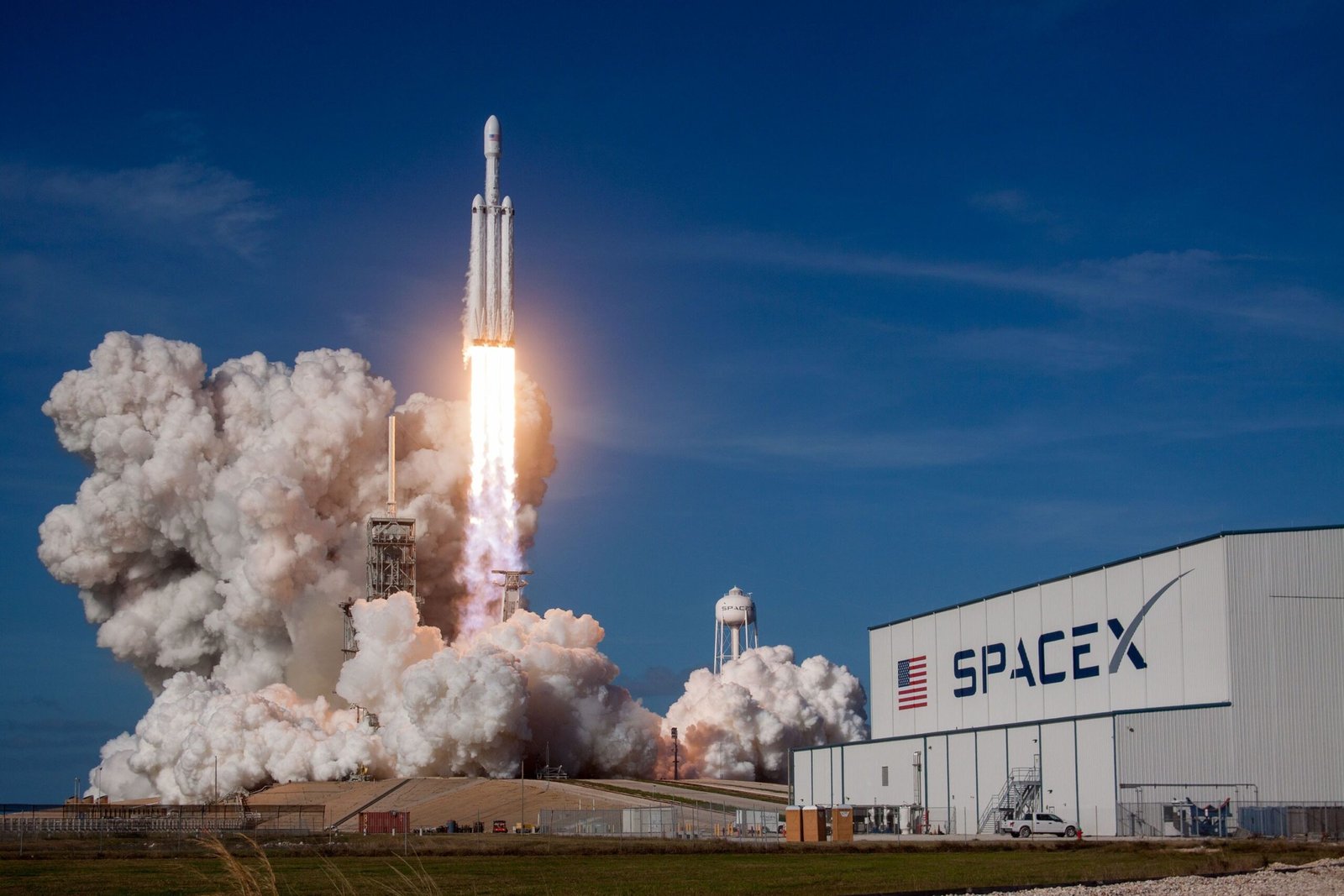
Introduction: The Most Ambitious Machine Ever Built Is Getting Ready
There is a rocket sitting on a launchpad in South Texas that was designed to change the course of human civilization. It stands nearly 123 meters tall — taller than the Statue of Liberty with its pedestal, taller than any rocket ever successfully flown in the history of spaceflight. Its engines collectively produce more thrust than any launch vehicle ever built. It is designed to be fully reusable, to fly multiple times per day in its mature form, and ultimately to carry 100 human beings across 225 million kilometers of cold, radiation-soaked interplanetary space to the surface of another world.
That rocket is SpaceX Starship. And the man who conceived it, funded it, and continues to drive its development with relentless intensity is Elon Musk — a person who has stated, with apparent sincerity, that the singular purpose of his professional life is to make humanity a multi-planetary species before it is too late.
Whether you find that vision inspiring, improbable, or somewhere in between, the engineering reality of what SpaceX has built is impossible to dismiss. Starship is not a concept on a whiteboard. It is a physical machine that has been test-flown multiple times, achieving milestones that engineers once considered extraordinarily difficult, and improving with each iteration at a pace that has surprised even optimistic observers. The SpaceX Starship updates emerging from Boca Chica, Texas, are among the most consequential developments in the history of space exploration. Understanding them requires understanding not just the rocket, but the vision driving it — and the extraordinary challenges that still lie ahead.
1. What Is SpaceX Starship and Why Does It Matter So Much?
To appreciate the significance of the latest SpaceX Starship updates, you first need to understand what makes this vehicle different from every rocket that came before it. Since the dawn of the space age in the late 1950s, virtually every rocket ever launched has been expendable — used once and discarded. The Saturn V that carried Apollo astronauts to the Moon was the most powerful rocket of its era, but each vehicle cost the equivalent of hundreds of millions of modern dollars and was destroyed on every mission. Even the Space Shuttle, which featured a reusable orbiter, discarded its enormous external fuel tank on every flight and required months of refurbishment between missions.
SpaceX challenged this model first with the Falcon 9, whose first-stage booster routinely lands itself and flies again — a genuine revolution in launch economics. But Starship takes the concept of reusability to its ultimate conclusion. Both the Super Heavy booster, which provides the initial thrust to get off the ground, and the Starship upper stage, which carries the payload or passengers, are designed for rapid, complete reuse. The goal is turnaround times measured in hours, not months, and a per-flight cost that eventually falls to a few million dollars or less — a reduction of roughly two orders of magnitude compared to existing heavy-lift rockets.
The Scale That Makes It Unique
The sheer scale of Starship is worth dwelling on. The Super Heavy booster is powered by 33 Raptor engines burning liquid methane and liquid oxygen — propellants chosen specifically because methane can theoretically be manufactured on Mars using local resources, enabling the vehicle to be refueled for the return journey without bringing fuel from Earth. At full thrust, the Super Heavy generates approximately 7,590 tonnes of force at liftoff, compared to about 3,400 tonnes for the Saturn V. The Starship upper stage carries its own six Raptor engines and is designed to hold either 100 passengers and their supplies or up to 150 tonnes of cargo in its payload bay. No vehicle in history has combined this level of capacity with the design goal of full and rapid reusability.
2. The Road to Here: Starship’s Test Flight History
The development of Starship has been characteristically SpaceX — fast, iterative, and punctuated by dramatic explosions that the company frames as learning opportunities rather than failures. Early prototype testing between 2020 and 2021 involved a series of high-altitude test flights of the Starship upper stage alone, reaching altitudes of around 10 kilometers before attempting a powered landing. Several of these tests ended in spectacular fireball landings, but each one provided data that fed directly into the next iteration. By May 2021, Starship SN15 completed the first successful high-altitude flight and landing, a turning point in the program.
The integrated Starship system — Super Heavy booster combined with the Starship upper stage — conducted its first full test flight in April 2023 from SpaceX’s Starbase facility at Boca Chica, Texas. The vehicle cleared the launch tower and reached an altitude of roughly 39 kilometers before experiencing a malfunction that triggered the flight termination system. Despite ending in an explosion, the flight demonstrated that the largest rocket ever built could actually lift off the ground and fly — a non-trivial achievement given the enormous engineering complexity involved.
The Milestone Flights That Changed Everything
Subsequent integrated test flights built rapidly on that foundation. The second test flight in November 2023 reached space for the first time, with the Super Heavy booster performing a successful stage separation before both vehicles were lost. The third test flight in March 2024 achieved orbit-class velocity, executed the Starship’s payload bay door operation, demonstrated propellant transfer technology critical for future deep space missions, and saw both vehicles survive to their planned end points — an enormous leap in demonstrated capability.
By late 2024, SpaceX achieved what many engineers had considered one of the most technically challenging milestones in the entire program: catching the returning Super Heavy booster with the launch tower’s mechanical arms, nicknamed Mechazilla, rather than landing it on legs. This approach eliminates the need for landing legs entirely, reducing the booster’s mass and allowing it to be prepared for the next flight directly at the launch mount. The visual of an enormous rocket booster being caught in mid-air by a pair of giant steel arms was one of the most astonishing things ever witnessed in the history of rocketry, and it demonstrated that SpaceX’s approach to rapid reusability is not merely theoretical.
3. The Physics of Getting to Mars: Why Starship Was Designed This Way
Understanding why Starship is designed the way it is requires grappling with the brutal mathematics of interplanetary travel. Mars and Earth are only close enough for efficient travel during specific alignment windows that occur roughly every 26 months, when the two planets are positioned so that a spacecraft following a fuel-efficient elliptical trajectory — called a Hohmann transfer orbit — can make the journey in approximately 6 to 9 months. Miss the window, and you wait over two years for the next one.
The challenge is not just getting to Mars — it is getting enough mass there to support a meaningful human presence. The early Apollo missions to the Moon carried three astronauts and very limited supplies. A Mars mission requires transporting not just crew but habitats, life support systems, scientific equipment, food for years, vehicles for surface exploration, and eventually the machinery needed to begin producing resources locally. The scale of logistics required is extraordinary, and it demands a vehicle with both massive payload capacity and very low cost per kilogram delivered.
Orbital Refueling: The Key to Making It Work
The most technically critical element of Elon Musk’s Mars architecture is orbital propellant transfer — the ability to refuel a Starship vehicle in Earth orbit before it departs for Mars. A Starship departing directly from Earth’s surface cannot carry enough propellant to both escape Earth’s gravity and then slow down and land on Mars with a meaningful payload. The solution is to launch the Mars-bound Starship into orbit with minimal propellant, then send a series of tanker Starships up to transfer propellant until the vehicle is fully fueled and ready for the interplanetary journey.
This requires developing reliable propellant transfer technology in space — a capability that does not yet exist operationally but that SpaceX has already begun testing. The third integrated test flight of Starship included a demonstration of internal propellant transfer between tanks, a necessary precursor to the full orbital refueling architecture. Getting this right is arguably the most important technical challenge standing between the current test program and actual Mars missions.
4. NASA and Starship: The Lunar Connection
While Elon Musk’s stated destination for Starship is Mars, the vehicle’s first operational crewed mission will actually go somewhere closer: the Moon. In April 2021, NASA selected a modified version of Starship as the Human Landing System for the Artemis program — the vehicle that will carry astronauts from lunar orbit down to the surface of the Moon and back. The contract, initially worth 2.9 billion dollars and subsequently expanded, represents NASA’s most significant investment in Starship’s development and has accelerated the program’s timeline considerably.
The lunar Starship variant, which SpaceX calls the HLS or Human Landing System, is optimized for the lunar environment and will not need the heat shield or atmospheric entry capabilities required for Mars. It will rendezvous with the Orion spacecraft in lunar orbit, take on crew and supplies, descend to the lunar surface, and then ascend back to orbit for crew handoff. NASA’s Artemis III mission, which will be the first crewed lunar landing under the program, is currently targeted to use this system for humanity’s return to the Moon’s surface for the first time since 1972.
What the Moon Missions Mean for the Mars Dream
The Artemis missions serve as far more than just a return to the Moon. SpaceX and Elon Musk, they represent an invaluable operational proving ground for every major system that a Mars mission will require. Long-duration life support, orbital rendezvous and docking, propellant transfer in space, precision landing on an airless world, crew operations in deep space — all of these will be tested and refined on lunar missions before they are trusted to carry humans on the vastly more demanding journey to Mars. The Moon is not a distraction from Mars. In SpaceX’s strategic thinking, it is the dress rehearsal.
5. The Mars Colony Vision: What Elon Musk Is Actually Planning
Elon Musk has been unusually specific about his long-term vision for Mars, outlining it in published papers, conference presentations, and countless public statements over more than a decade. The goal is not merely landing on Mars as a symbolic achievement — it is establishing a self-sustaining city of at least one million people, large enough that the Martian civilization could survive even if contact with Earth were severed.
Musk’s stated rationale is explicitly about existential risk. He argues that keeping all of humanity on a single planet leaves our species vulnerable to extinction from asteroid impacts, pandemics, nuclear war, or other catastrophic events, and that spreading human civilization to a second planet is the most meaningful insurance policy available. He has framed the cost of achieving this as comparable, as a fraction of global GDP, to historical projects like building the transcontinental railroad or the interstate highway system — enormous but not beyond reach for a civilization that chooses to commit to it.
The Timeline and the Challenges
Musk’s projected timeline for the first uncrewed Starship landing on Mars targets the late 2020s, with crewed missions potentially following in the early 2030s, contingent on Starship achieving full operational maturity. These dates have shifted before and may shift again — Musk’s timelines are famously optimistic, and the engineering challenges that remain are genuinely formidable. Successfully producing oxygen and water from Martian resources, shielding colonists from the elevated radiation environment, developing reliable food production systems, and managing the profound psychological challenges of living in an isolated, confined, alien environment for years are all problems that do not yet have fully tested solutions.
Yet the trajectory of progress is undeniable. Five years ago, Starship was an unproven prototype that had never left the ground intact. Today, it has reached space, demonstrated orbital-class performance, executed propellant transfer tests, and shown that its booster can be caught and reused. The pace of development, driven by SpaceX’s iterative engineering culture and Musk’s relentless pressure to move faster, continues to accelerate.
6. Starship’s Role Beyond Mars: Transforming All of Space Travel
While Mars represents the ultimate destination in Elon Musk’s vision, the SpaceX Starship updates coming out of Boca Chica reflect a vehicle being designed to transform every aspect of humanity’s presence in space, not just one mission to one planet.
Starship’s payload capacity makes it capable of deploying satellites and space station components far larger than anything previously possible. Space telescopes orders of magnitude more capable than the James Webb could be launched in a single mission. Lunar bases could be supplied economically and regularly. Asteroid mining operations, which require transporting heavy equipment to the asteroid belt and returning valuable materials to Earth orbit, become economically viable at Starship’s projected cost per kilogram.
There is even a concept within SpaceX for using Starship as an ultra-fast point-to-point transport on Earth itself — flying passengers from New York to Shanghai in under 40 minutes by arcing through space. Whether that application ever becomes commercially practical is debatable, but it illustrates how fundamentally Starship’s economics, if realized, would change the calculus of what is possible for humanity in and beyond Earth’s atmosphere.
Frequently Asked Questions (FAQ)
Q: What is the current status of SpaceX Starship as of 2026? As of early 2026, SpaceX Starship has completed multiple integrated test flights, achieving key milestones including reaching orbit-class velocity, demonstrating propellant transfer technology, and successfully catching the Super Heavy booster with the launch tower’s mechanical arms. The program is actively working toward full operational capability, including the orbital refueling demonstrations required for both NASA’s Artemis lunar missions and eventual Mars flights.
Q: How long would a trip to Mars on Starship take? A crewed Mars mission aboard Starship would take approximately 6 to 9 months, depending on the specific trajectory and the alignment window between Earth and Mars at the time of departure. These windows occur every 26 months when the two planets are positioned for fuel-efficient transfer orbits. Future advances in propulsion technology, including nuclear thermal propulsion, could eventually reduce this journey time significantly.
Q: Why did SpaceX choose methane as Starship’s propellant? SpaceX chose liquid methane rather than the liquid hydrogen used by many other rockets for several important reasons. Methane is denser and easier to store than hydrogen, simplifying the propellant system. It produces less engine residue, making the Raptor engines more reusable. Most critically for the Mars mission, methane can theoretically be manufactured on Mars using the Sabatier reaction — combining carbon dioxide from the Martian atmosphere with water from subsurface ice to produce methane and oxygen — enabling Starship to be refueled on Mars for the return journey.
Q: Has NASA officially chosen Starship for the Moon landing? Yes. NASA selected SpaceX’s Starship Human Landing System for the Artemis program in April 2021, and the contract has since been expanded. A modified version of Starship will carry astronauts from lunar orbit to the Moon’s surface and back as part of the Artemis III mission and subsequent lunar landings. This represents the first operational crewed mission for the Starship platform and will serve as a critical proving ground for the systems needed on Mars missions.
Q: What is Elon Musk’s ultimate goal for Mars, and why does he want to go? Elon Musk’s stated ultimate goal is to establish a self-sustaining city of at least one million people on Mars, making humanity a multi-planetary species. His primary motivation is reducing existential risk — he argues that a civilization confined to a single planet is vulnerable to extinction-level events, and that establishing a second home for humanity on Mars is the most important long-term insurance policy our species can pursue. He views this as the defining challenge and opportunity of the current era of human history.
Conclusion: The Red Planet Is No Longer Just a Dream
For most of human history, Mars was a reddish dot in the night sky — mysterious, unreachable, and the subject of wild speculation about what might live there. Then came the robotic explorers: Mariner, Viking, Pathfinder, Curiosity, Perseverance — machines that have mapped its canyons, analyzed its soil, photographed its sunsets, and confirmed that liquid water once flowed across its surface. Mars is no longer unknown. It is a place. A specific, scientifically understood, physically real place with a surface area comparable to all of Earth’s continents combined, waiting to be explored by the one kind of explorer that has never been there: a human being.
The SpaceX Starship updates emerging week by week from the Texas coast are not just news stories about a rocket. They are chapters in one of the greatest stories ever told — the story of a species that looked up at the stars and decided, against all odds, to actually go. The engineering challenges that remain are real and significant. The risks are genuine. The timeline may shift. But the direction is clear, and the progress is undeniable.
Somewhere in the not-too-distant future, a Starship will lift off from a launchpad, arc through the atmosphere, and disappear into the black — bound for a world that has been waiting 4.5 billion years for its first human visitor. The universe is vast beyond imagining. Mars is just the first step.
The journey has already begun.
0 thoughts on “SpaceX Starship Updates: How Elon Musk Plans to Reach Mars”